
Last updated November 15, 2026
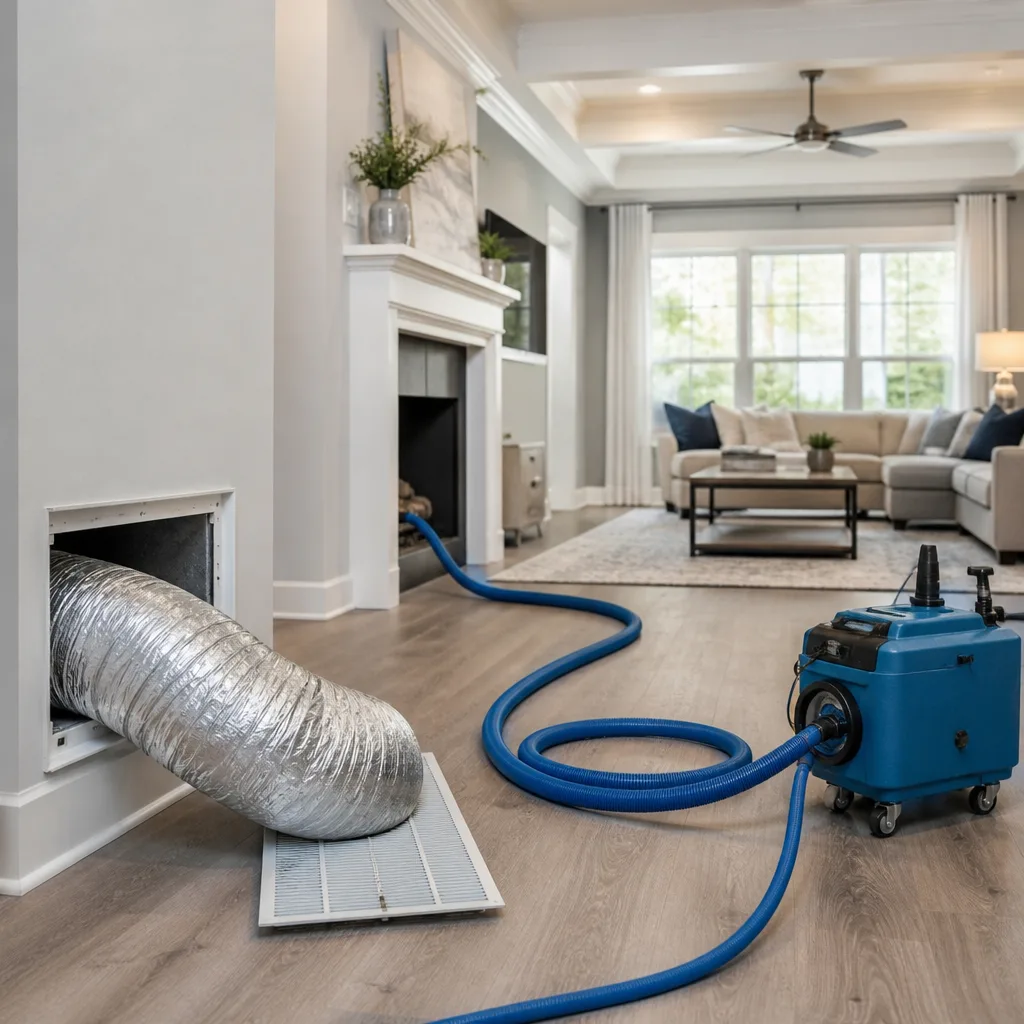 Whole-home duct cleaning
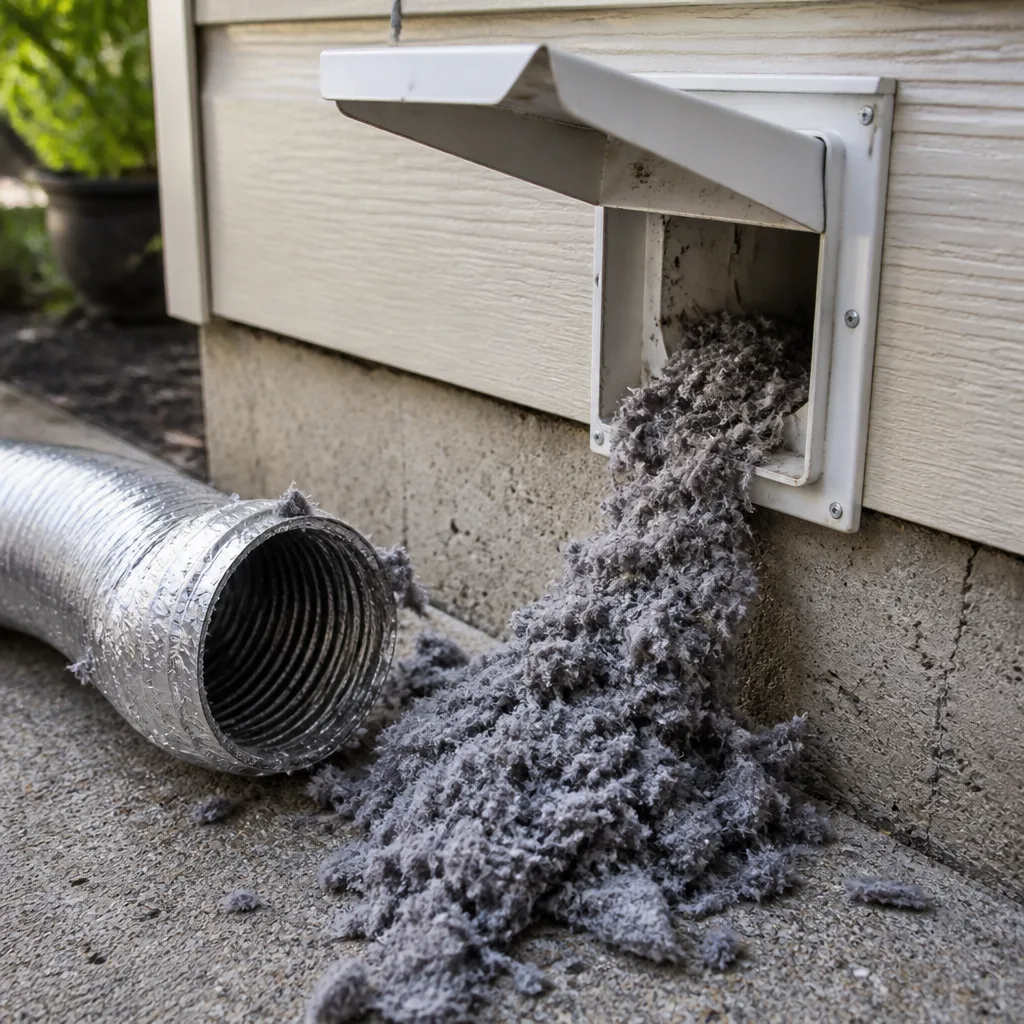 Dryer vent cleaning
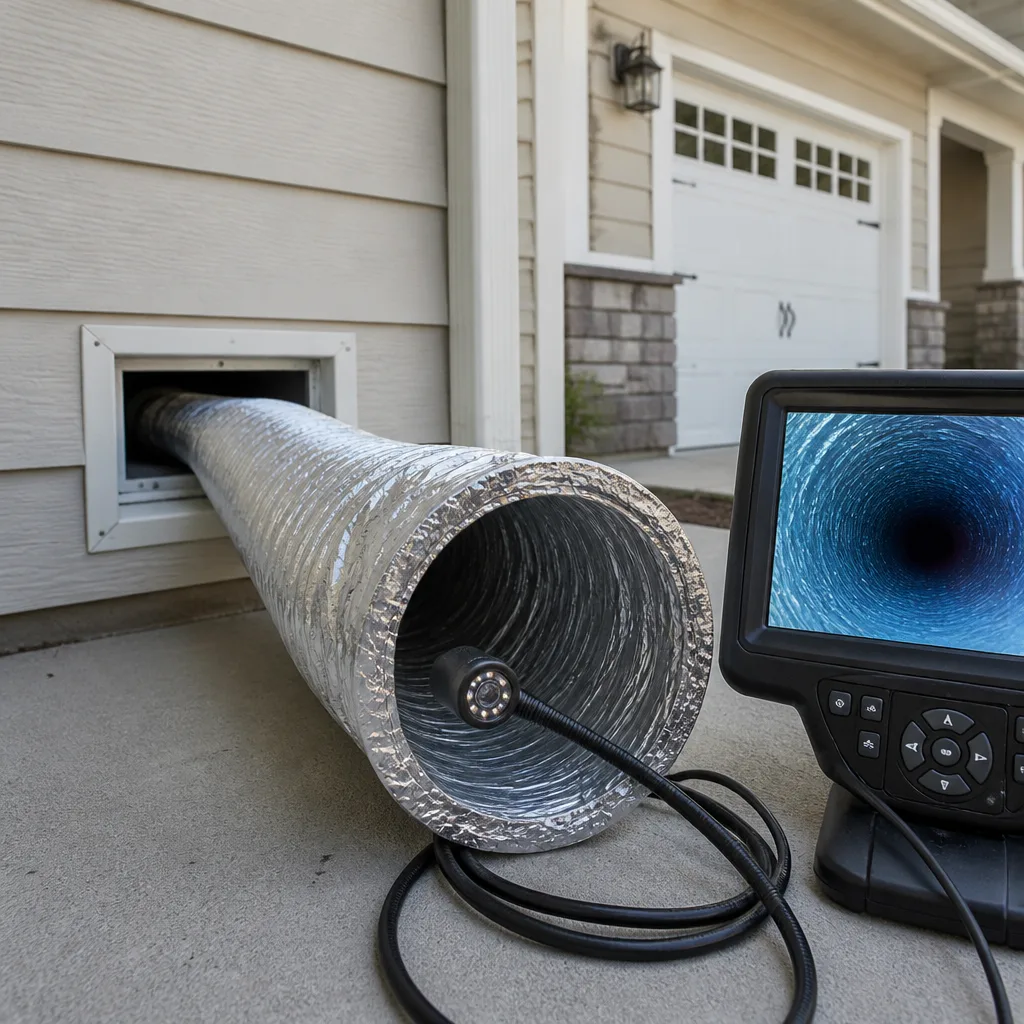 Camera inspection
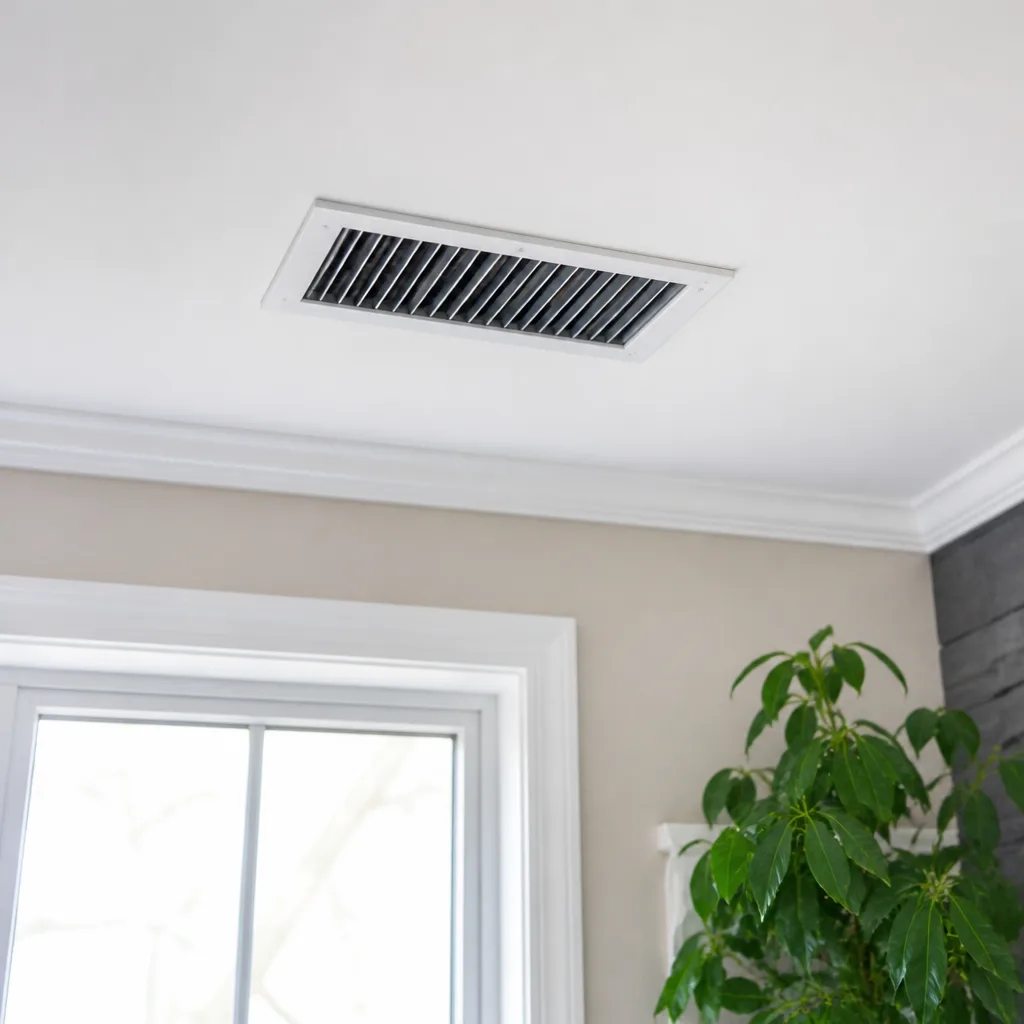 Sanitizing & deodorizing
Whole-system duct and dryer vent check with before-and-after photos - you see exactly what came out of your vents
That "$99 whole-house special" is a bait ad - the real number appears once they are in your hallway, or the "clean" is a shop-vac at the register. We photograph the inside of your ducts before and after instead.
Choosing the Right Air Duct Cleaning Brand: A Buyer’s Guide for Metairie
Most homeowners choose a duct cleaning company by price. They call three numbers, take the lowest quote, and hope for the best. That approach misses the single most telling detail: what equipment the company plans to bring into your house. A crew with a shop vac and a brush is not set up to do what a crew with a rotary agitation system and a HEPA-filtered extractor can do. In this guide, we’ll walk through the professional equipment brands that separate serious operators from opportunists in Metairie, explain what each machine actually does, and give you the exact questions to ask before you book.
Quick Answer
A reputable air duct cleaning company should be able to name the professional equipment they’ll use before they show up, such as a rotary brush system from Rotobrush or a negative-air machine from Abatement Technologies. When a contractor can’t or won’t identify their equipment, treat that as a sign they may be running consumer-grade gear. The equipment brand is a shortcut to judging whether a company has invested in doing this work properly.
Styles & brands we work with
- Whole-home duct cleaning
- Dryer vent cleaning
- Camera inspection
- Sanitizing & deodorizing
Table of Contents
- Why Equipment Brand Is the Fastest Quality Signal
- The Major Professional Duct Cleaning Equipment Brands
- How Rotobrush Rotary Systems Work
- Negative-Air and HEPA Extraction: Why Containment Matters
- Questions to Ask Any Contractor Before Booking
- What Professional Equipment Looks Like Arriving at Your Home
- Cleaning vs. Repair: What the Equipment Can’t Fix
- How to Verify Equipment Claims
Why Equipment Brand Is the Fastest Quality Signal
You can’t see inside your ducts while a crew is working. You can’t verify how much debris came out or whether the agitation was thorough. What you can see is the equipment parked at your curb. That makes equipment a rare, concrete proxy for quality in an industry where the finished result is largely invisible to the homeowner.
Professional duct cleaning gear is a real capital investment. A rotary brush system, a commercial negative-air machine, and HEPA-grade filtration equipment are purpose-built tools with price tags that a casual operator isn’t going to carry. When a company owns them, that commitment shows up in the work. When a company rents a shop vac, the cleaning runs shallow because the tool simply isn’t capable of more.
This is why we lead with the machinery when homeowners ask how we work. We run Rotobrush and Nikro systems for agitation and extraction, and Abatement Technologies air filtration units to control particulates during service. The equipment is part of what we’re selling, and we’re happy to say so before anyone books a visit.
In Metairie, where many homes are built slab-on-grade and duct runs travel through tight attic spaces and interior chases, the right equipment matters for another reason: access. A rotary brush system can navigate ductwork that a shop vac can’t reach, which means the difference between cleaning the trunk lines and actually cleaning the branches feeding each room.
The Major Professional Duct Cleaning Equipment Brands
There are a handful of equipment manufacturers that serious duct cleaning companies rely on. Knowing their names helps you recognize when a contractor is serious and when they’re winging it. The short version: each brand is designed for a specific job in the cleaning process, from mechanical agitation to airborne containment to structural repair support.
- Rotobrush – a rotary brush system purpose-built for duct cleaning. The brush head rotates as it moves through the duct, mechanically loosening debris from the walls instead of just pulling air past it.
- Abatement Technologies – commercial-grade air filtration and negative-air equipment. These units are the same category of tool used in professional remediation work, which says something about how much containment a company is prepared to maintain during service.
- Nikro – vacuum and negative-air equipment used across remediation and restoration trades. Nikro systems help maintain extraction pressure so loosened debris leaves the system rather than settling back into it.
- Truck-mounted negative pressure systems – large vacuum units that connect directly to the ductwork and pull the whole system under negative pressure for the duration of the job.
- HEPA-grade extractors – portable or truck-mounted vacuums with HEPA filtration that capture fine particulates, not just bulk debris.
You don’t need to remember all of them. You just need to recognize that a serious operator should recognize them, and be able to tell you which ones they’re using and why.
How Rotobrush Rotary Systems Work
A rotary brush system is the workhorse of mechanical duct cleaning. Here’s what actually happens during a pass.
- The brush head is fed into the duct through a register opening, on a flexible shaft or cable connected to the drive unit.
- The brush spins as it travels, knocking loose the dust, lint, and settled debris that sticks to the duct walls. Airflow alone won’t lift this material; agitation is what breaks it free.
- A negative-air extractor pulls loosened material out of the system simultaneously, so debris is captured at the machine rather than blowing into the rooms.
- The brush is worked through the full run, from the register to the trunk and back, before moving to the next branch.
This is the difference between cleaning and sweeping air around. A shop vac attached to a register will pull surface dust from the nearest section of duct, but it can’t reach around bends, and it can’t scrape the walls. Rotobrush systems are designed specifically to do both, which is why we use them across every job, including the deep runs common in older Metairie homes where ductwork has been in place for a while.
One thing worth asking: how long does the agitation phase take? A crew that rushes through with the brush for two minutes per duct is not doing the same job as one that takes the time to work the full length of each run. The equipment matters, but so does the operator.
Negative-Air and HEPA Extraction: Why Containment Matters
Agitation without containment is half a job. When a brush breaks debris loose, that material has to go somewhere. If the only thing running is the brush system itself, fine dust ends up pushed into the room you’re standing in, settling on furniture, curtains, and shelves within minutes.
Negative-air equipment solves that. Abatement Technologies units and Nikro vacuums with HEPA filtration keep the entire duct system under a slight vacuum during cleaning, so debris is continuously pulled toward the extractor and captured in a filter. The room air stays cleaner, and the material that comes out of your ducts actually leaves the house.
This matters most for households in Metairie where someone deals with allergies or asthma. A cleaning that liberates dust into the living space can trigger symptoms in the short term, even if the ducts end up cleaner in the long run. HEPA-grade extraction is the safeguard against that. It’s also what separates a cleaning that protects indoor air quality from a cleaning that just stirs things up.
When you talk to a contractor, ask whether their extractor is HEPA-rated and whether they run negative pressure for the full job. Vague answers here are worth noticing.
Questions to Ask Any Contractor Before Booking
Here’s a short list of questions, in order. The answers you get will tell you a lot more than a price quote will.
- What equipment will you bring? You’re looking for named brands: Rotobrush, Nikro, Abatement Technologies. “We use professional equipment” without names is a soft answer.
- Do you use a rotary brush or just a vacuum? Rotary agitation is what actually cleans duct walls. Vacuum-only service is surface dust, not cleaning.
- Is your extraction HEPA-rated? Yes is the answer you want. “I’d have to check” is fine on the phone if they follow up with a specific answer.
- Do you run negative pressure during the job? This tells you whether they’re serious about containment.
- Do you inspect the ductwork before cleaning? A visual check catches disconnected joints and damaged runs before the brush goes through them.
- Do you offer repair if you find a problem? Cleaning a broken duct doesn’t fix the leak. Repair capability is a sign of full-scope commitment.
- Can you show photos of the work? Before-and-after photos of your own ductwork are reasonable to request. A confident company expects you to ask.
Good answers are specific and quick. Vague answers (“we use commercial stuff,” “yeah, all the usual”) are a sign that the equipment conversation isn’t one they have often, because it’s not one they can win.
What Professional Equipment Looks Like Arriving at Your Home
When a properly equipped crew pulls up, you’ll notice the difference before anyone knocks. Here’s what to look for.
- A purpose-built rotary brush drive unit – a compact machine on a cart or in a case, not a repurposed tool. Rotobrush systems are recognizable as duct cleaning equipment, not general-purpose vacuums.
- A commercial extractor with HEPA filtration – a substantial machine, often on wheels, with a visible filter housing. It looks like a serious piece of gear.
- Negative-air filtration equipment – an additional unit, often set up near the work area, with a visible filter stack.
- Flexible shafts and brush heads – the tools that go into the ducts. These are not shop vac attachments.
- Hose connections for the registers – the extractor connects to the system at a register or return, not just to the floor.
If a technician arrives with a standard wet/dry vac and a hand brush, that is information. It means the cleaning will be limited to what that equipment can reach, which is very little of your actual duct system. The price may be lower, but so is the work. That’s not a savings; it’s a different service.
Cleaning vs. Repair: What the Equipment Can’t Fix
Cleaning tools remove debris. They don’t reconnect a duct that has pulled apart at a joint, seal a leak at a trunk transition, or repair a crushed run. If your ductwork has structural problems, the equipment you chose for cleaning is not going to solve them, no matter how good it is.
This is why we treat air duct cleaning and duct repair as two distinct services. Cleaning is what restores airflow and reduces dust load in a system that’s intact. Repair is what addresses the leaks, disconnections, and damage that no amount of cleaning can fix. A company that offers only cleaning will either miss structural problems or clean around them, which means the debris keeps coming back through the same gaps.
For homeowners in Metairie, repair capability matters because ductwork in many homes runs through attic spaces that get hot and humid for much of the year. That environment is hard on flexible duct connections, and it’s not unusual to find sections that have worked loose over time. If a cleaning visit turns up disconnected joints, you want a contractor who can quote the repair alongside the cleaning, not someone who refers you elsewhere.
Ask directly: “If you find a leak or a disconnected duct during cleaning, do you repair it, or do I need a separate contractor?” The answer tells you how complete the service actually is.
How to Verify Equipment Claims
Companies sometimes claim equipment they don’t own. Here are practical ways to check before you book.
- Ask for the model or brand name on the phone. A real operator can say it without hesitation. If they need to “check with the office,” that’s a soft signal.
- Look for photos on their website or materials showing the equipment in use. Rotobrush and Abatement Technologies units are visually distinct, so photos are easy to recognize.
- Ask about the cleaning process step by step. Someone who knows their equipment can explain the sequence: inspection, agitation, extraction, containment. Someone who doesn’t will give a one-line answer.
- Ask whether they use one machine or several. Professional cleaning typically involves at least a rotary system and an extractor, often plus a negative-air unit. One machine doing everything is a warning sign.
- Watch what arrives on the day. If the equipment at your door doesn’t match what was described on the phone, stop and ask questions before any work begins.
Verification is reasonable, and any contractor who’s proud of their equipment will welcome the questions. If it feels like you’re pulling teeth to get specifics, that’s your answer.
Common Mistakes to Avoid
- Choosing on price alone. A very low quote usually reflects what the equipment can’t do, not a discount on the same work. The gap between quotes is often the gap between a shop vac and a rotary brush system.
- Accepting “professional equipment” without a name. Names are checkable. Vague phrases aren’t. Ask for the brand, not the adjective.
- Skipping the inspection. Cleaning a duct system that has a disconnected joint pushes debris into the space around the duct, not out of the system. Inspection comes first.
- Forgetting the dryer vent. A dryer that takes two cycles to dry a load is often a sign of a clogged vent. Dryer vent cleaning is a real fire-safety service, not an add-on, and it uses similar equipment to what cleans your ducts.
- Ignoring the air filter brands inside the system. Homes with Aprilaire or Honeywell filtration in place often need a different approach to cleaning, because the filter housing, bypass, and media all interact with the ductwork. Ask whether they’ve worked with yours.
- Booking without asking about containment. If the extractor isn’t HEPA-rated and there’s no negative pressure, expect dust in the air during the job, which matters if anyone in the home has allergies.
- Assuming cleaning fixes an airflow problem. If the ducts are intact and clean but a room still doesn’t heat or cool properly, the issue may be a leak or damaged run that cleaning can’t touch.
See the difference
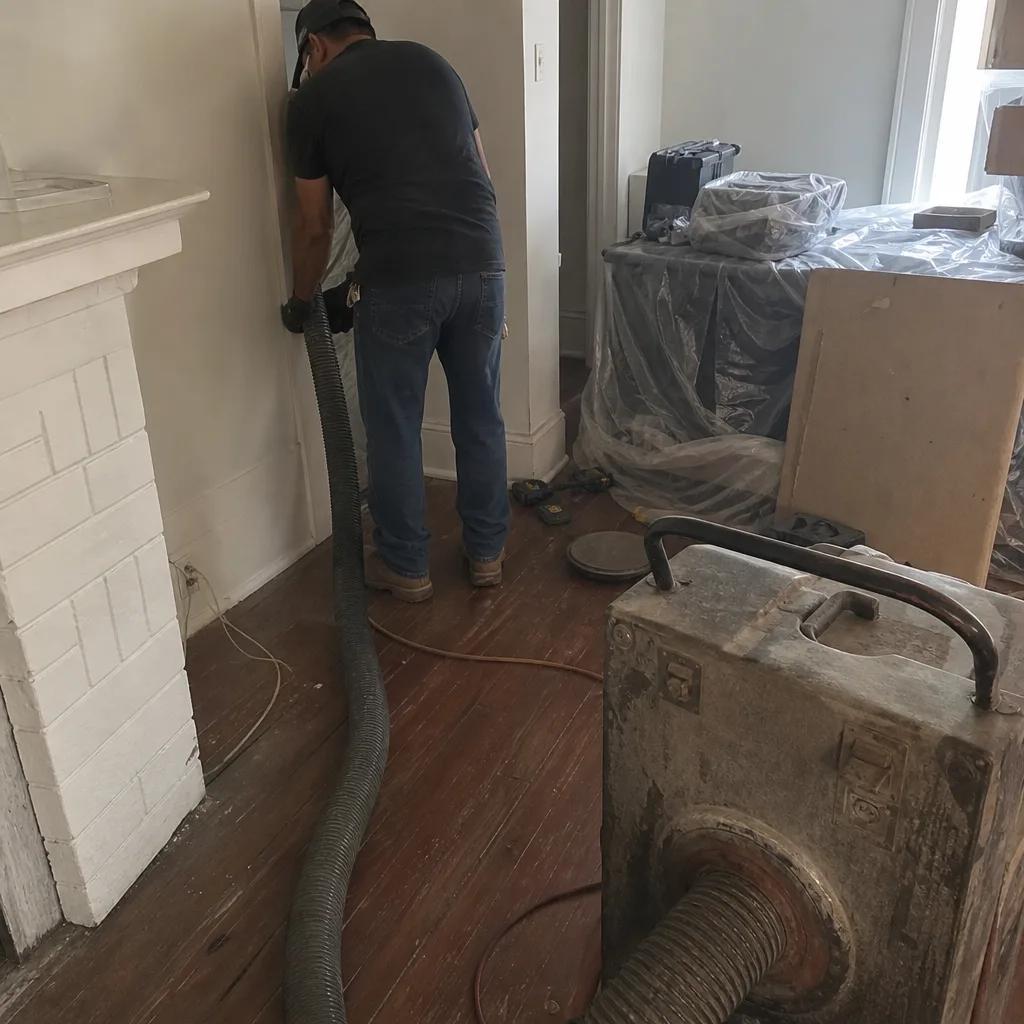 Before
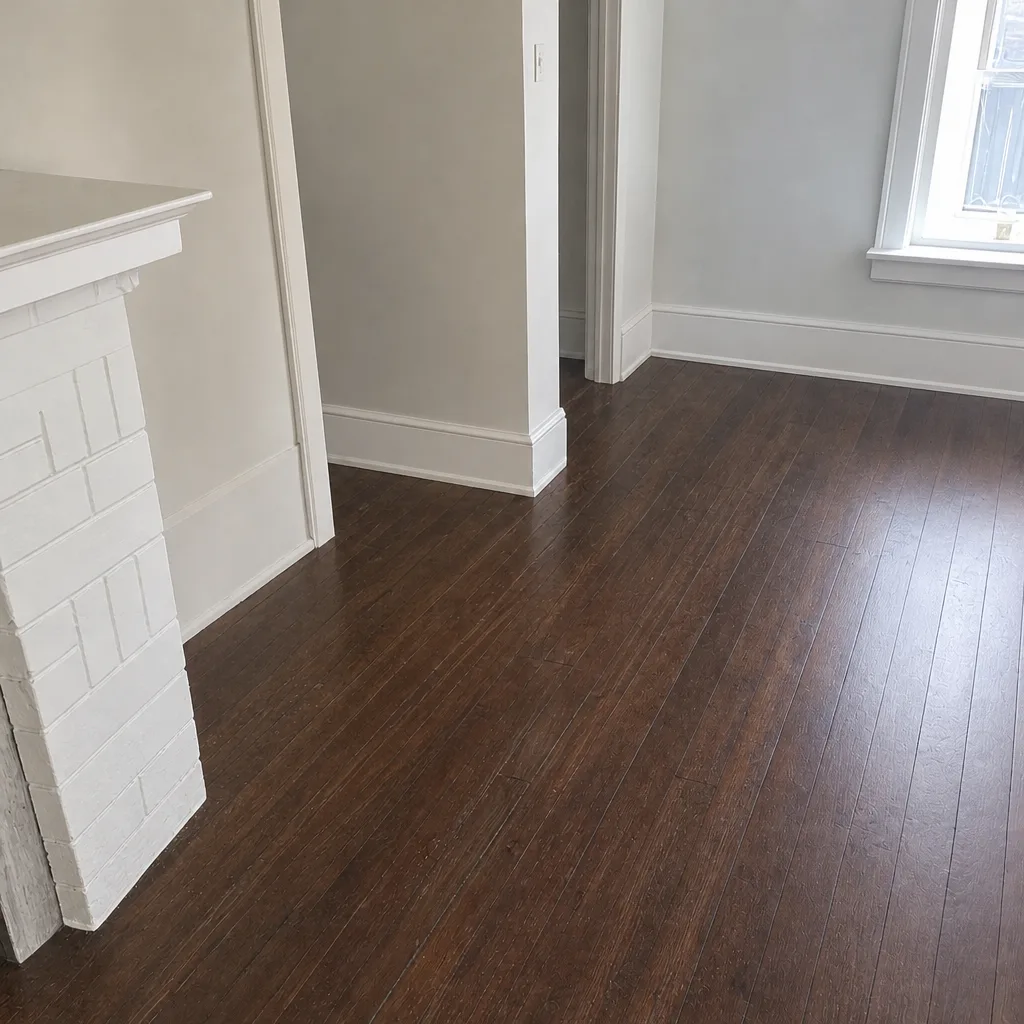 After
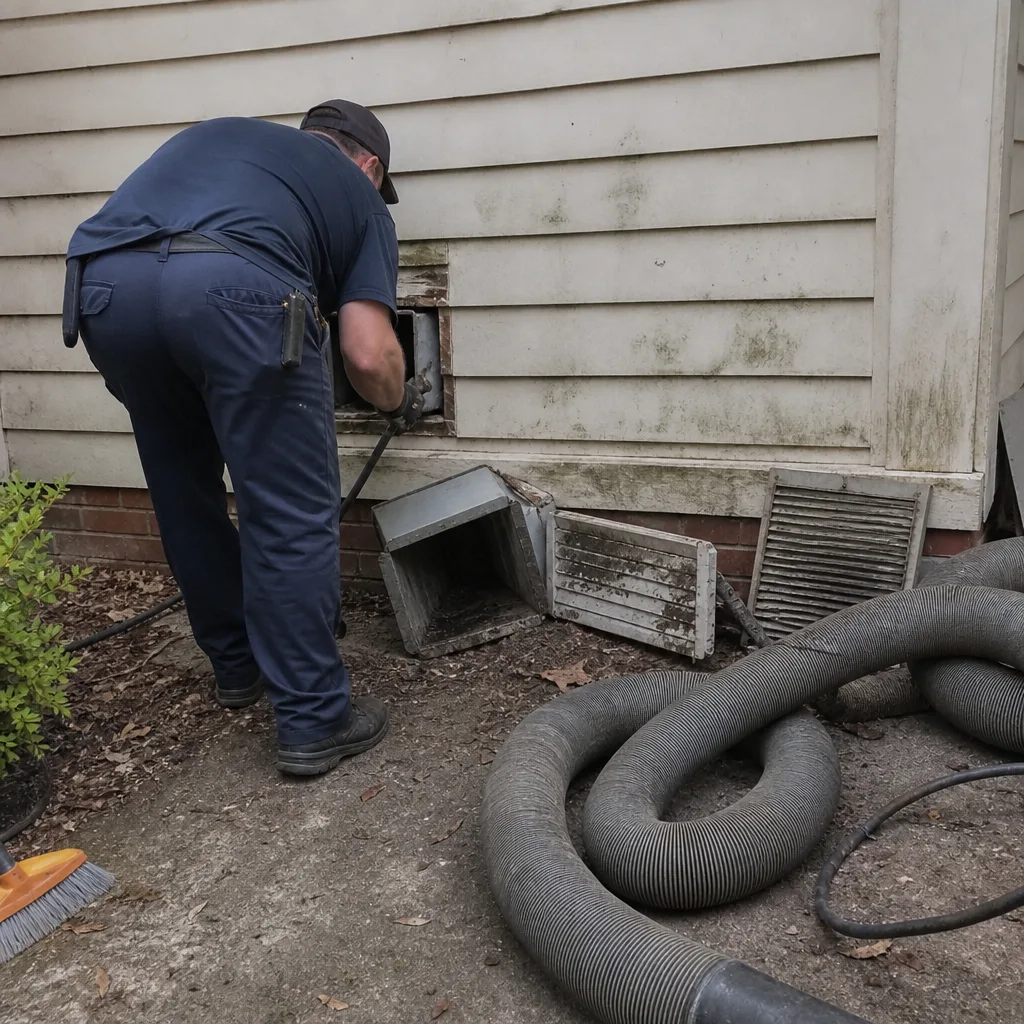 Before
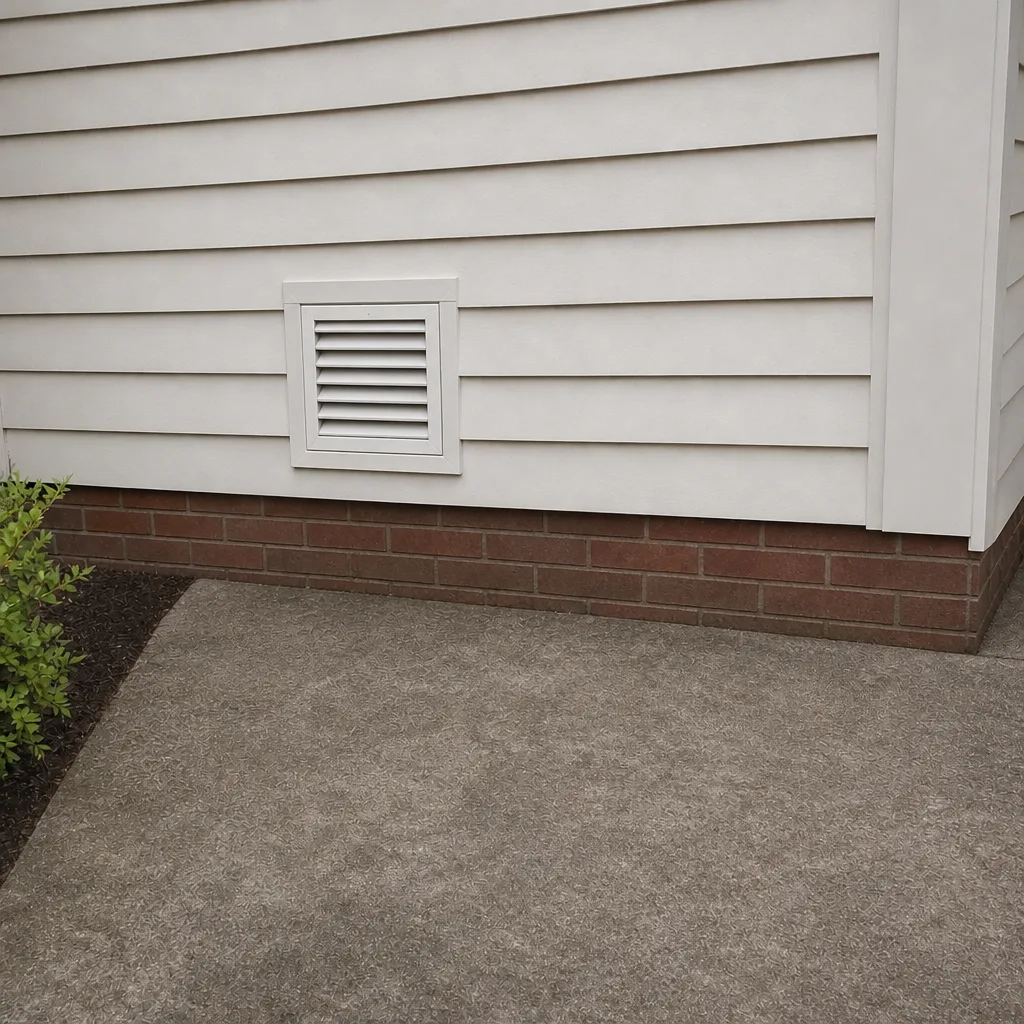 After
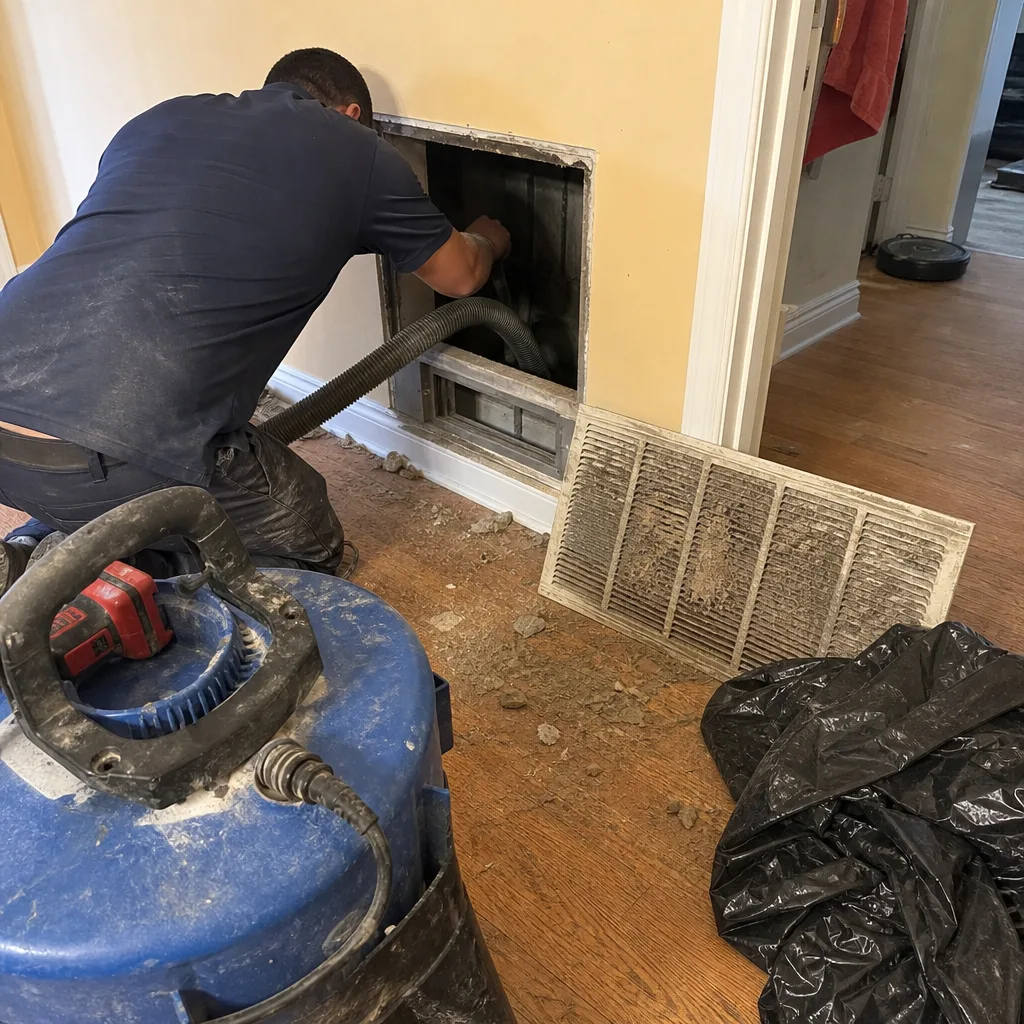 Before
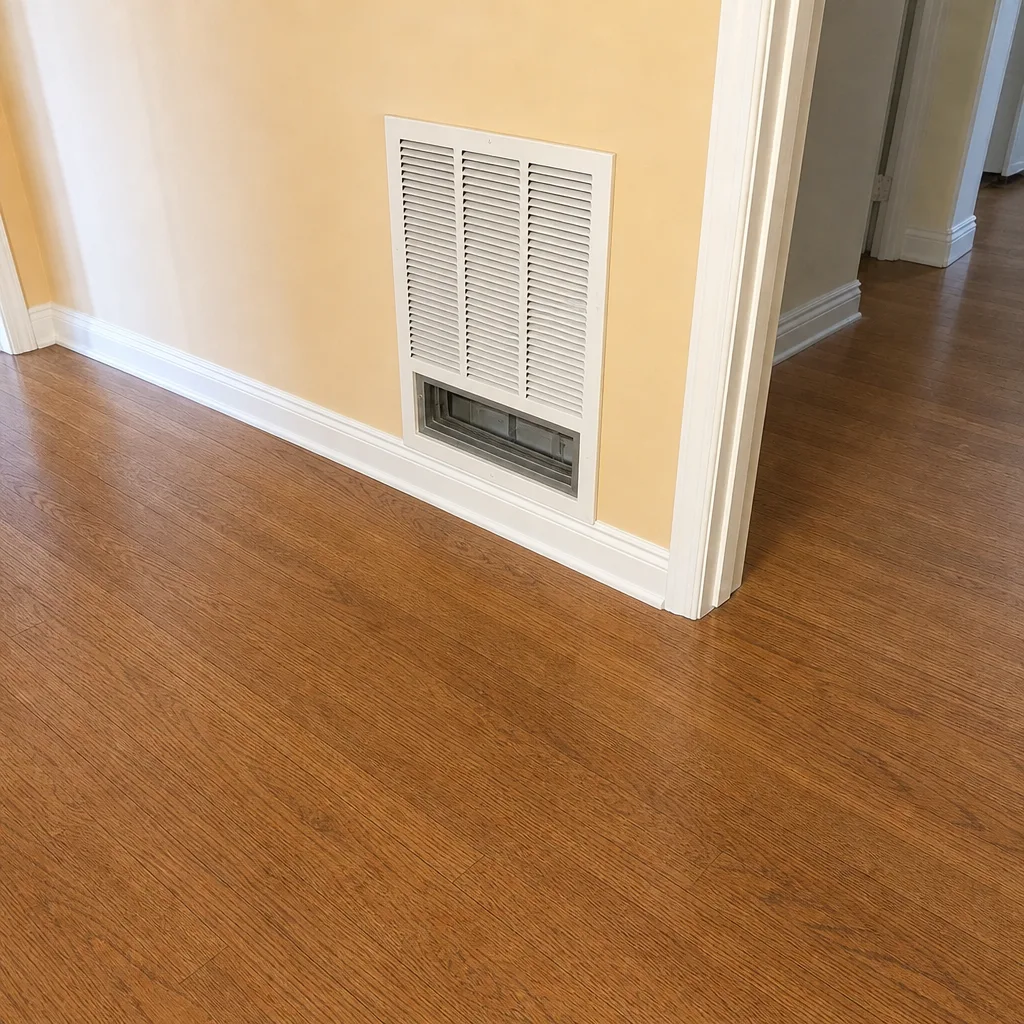 After
When to Call a Professional
Some signs point clearly to a professional visit. If you’re seeing visible dust trails at the registers, or dust settling on surfaces within a day or two of cleaning, the system is likely moving more debris than it should. If allergy symptoms inside the home have gotten worse and the filters are being changed on schedule, ductwork is a reasonable next place to look. If your dryer takes more than one cycle to dry a normal load, the vent is probably restricted, and that’s worth addressing for safety reasons. If the airflow to one or more rooms has dropped noticeably, a damaged or disconnected duct may be the cause, and that requires repair rather than cleaning alone. In those cases, a professional inspection will tell you what the problem actually is instead of guessing. Duct Cleaning Metairie offers free estimates in Metairie. Call (833) 576-1083. We answer 24/7. Fast dispatch from 7am to 7pm, Sunday through Friday.
Frequently Asked Questions
A serious duct cleaning company should be using named professional equipment such as Rotobrush rotary brush systems and Abatement Technologies or Nikro extraction units. Those brands are purpose-built for duct cleaning and professional containment, and a company that owns them has made a real capital investment in the trade. If a contractor can’t name their equipment, treat that as a sign to ask more questions before booking.
Equipment brand tells you what the crew is actually capable of doing inside your ducts. A rotary brush system can agitate and lift debris from duct walls that a vacuum alone can’t reach. A very low price often reflects a lower-capability tool, which means the cleaning is shallower, not cheaper for the same work. Call (833) 576-1083 for an honest assessment of what your system needs.
A rotary brush system is purpose-built to spin a cleaning head through your ductwork, so it can knock debris off the walls along the full run. A shop vac pulls air from the nearest section of duct it can reach and can’t navigate around bends or scrub the duct surface. The two tools produce very different results, even at the same visit duration.
Metairie’s warm, humid stretch of the year means attic ductwork in many homes stays in a humid environment for months, which can be hard on flexible connections. That makes inspection before cleaning useful, because loose or damaged joints are more likely to be found and repaired rather than cleaned around. Homes with Aprilaire or Honeywell filtration also benefit from a contractor who’s familiar with how those systems are built.
Yes, and you should. Ask for the brand and model on the phone, look for photos of the equipment in use, and check that what arrives on the day matches what was described. A company that’s serious about its equipment will answer without hesitation. If it feels evasive, that’s a useful answer in itself.
Cleaning cannot fix a leak, a crushed run, or a disconnected joint. If an inspection finds structural problems, the work needs a repair scope, and not every duct cleaning company offers one. We provide repair as a standalone service so a system that has integrity problems gets properly fixed. Call (833) 576-1083 to schedule a free estimate. We answer 24/7. Fast dispatch from 7am to 7pm, Sunday through Friday.
The Bottom Line
Equipment is the clearest shortcut to judging a duct cleaning company. Ask for names, not adjectives. Look for Rotobrush rotary systems, Abatement Technologies or Nikro extraction, and a company that runs HEPA-rated containment during the job. Watch what actually arrives at your door. And check whether the contractor can handle repair as well as cleaning, because the best equipment in the world won’t reconnect a duct that’s come apart. Our technicians have up to 9 years of experience, and we’re glad to talk equipment before you book. For an estimate, call (833) 576-1083. We answer 24/7. Fast dispatch from 7am to 7pm, Sunday through Friday. Metairie homeowners deserve a clear answer on what’s coming into their house.
Written by the team at Duct Cleaning Metairie.