
Last updated November 15, 2026
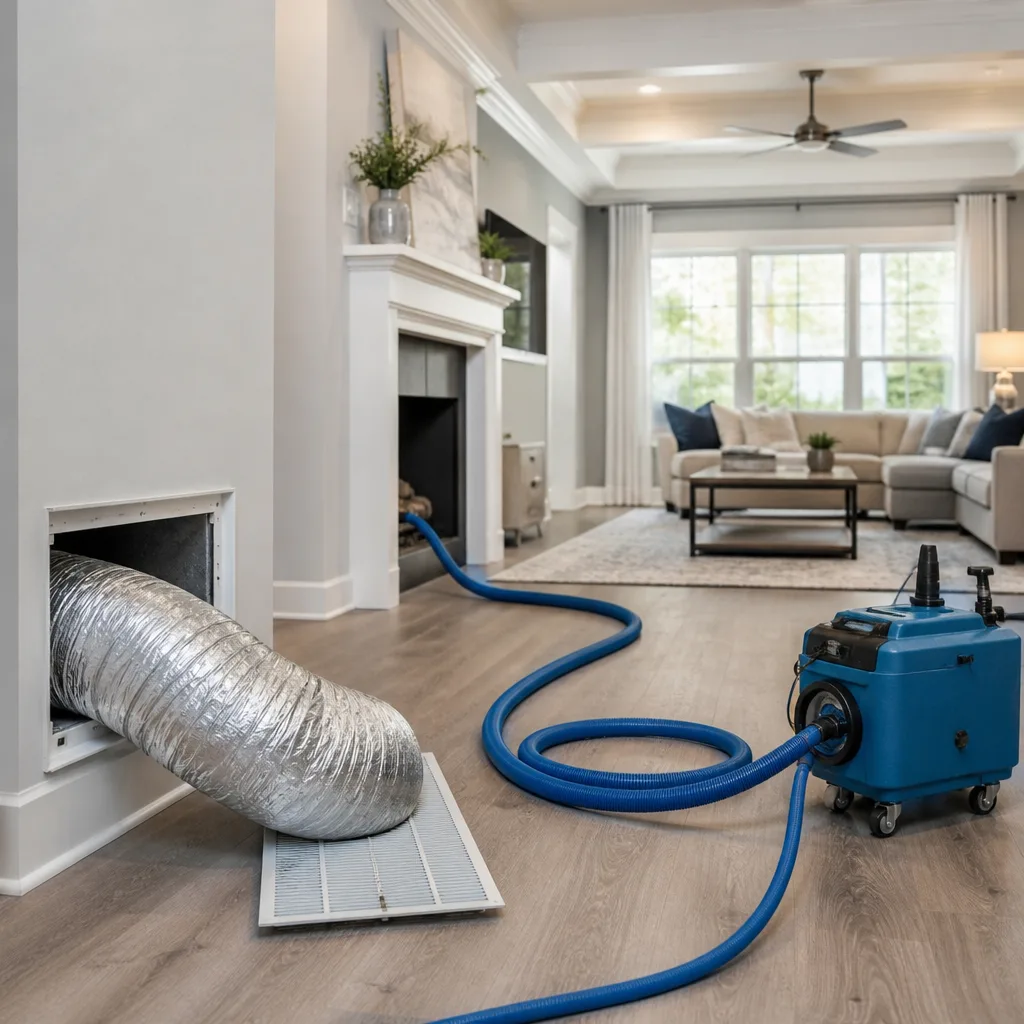 Whole-home duct cleaning
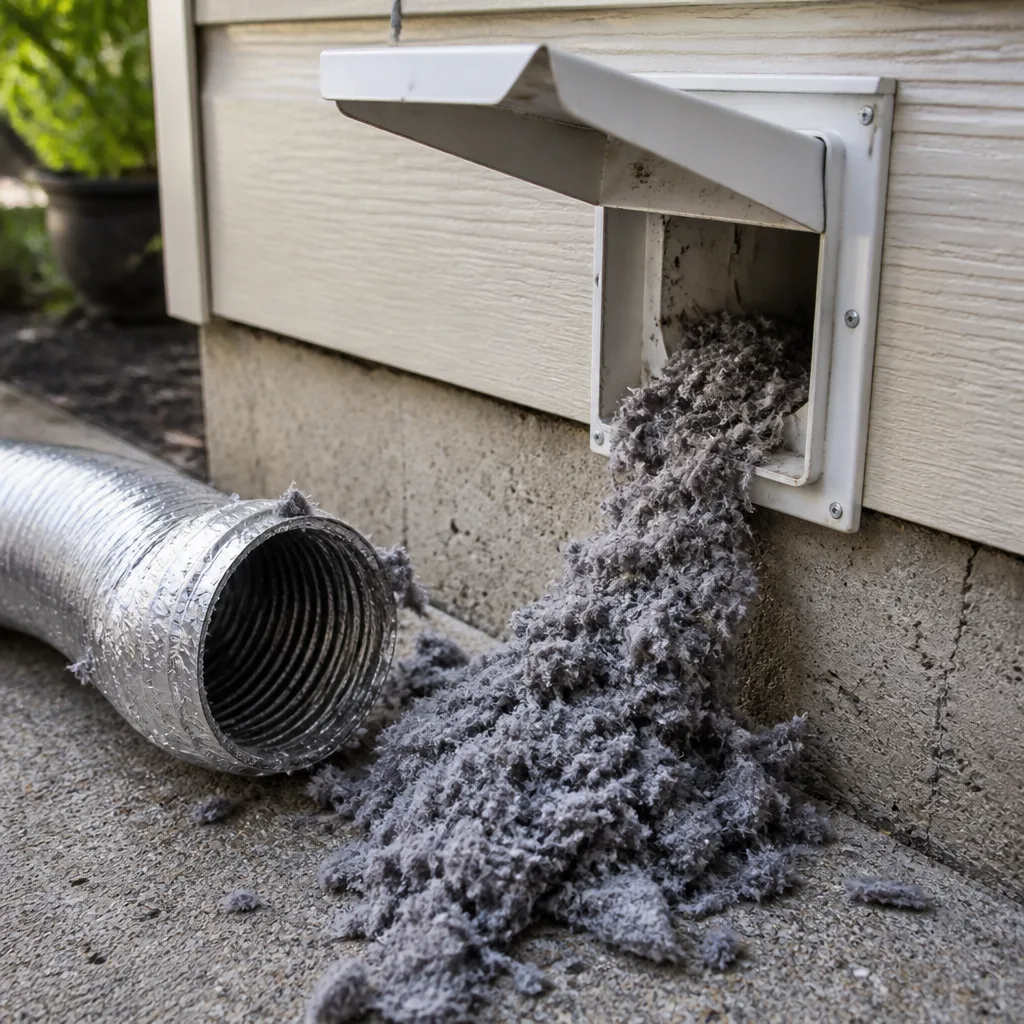 Dryer vent cleaning
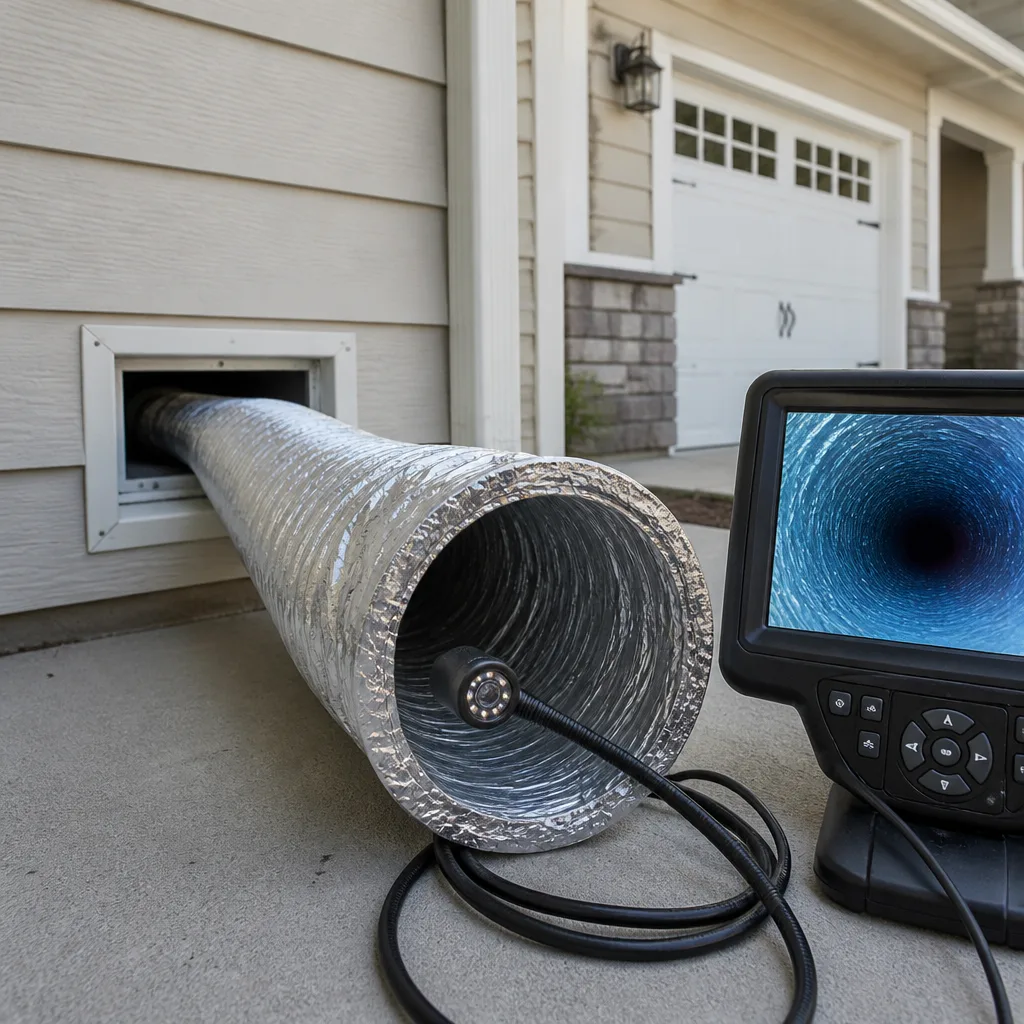 Camera inspection
 Sanitizing & deodorizing
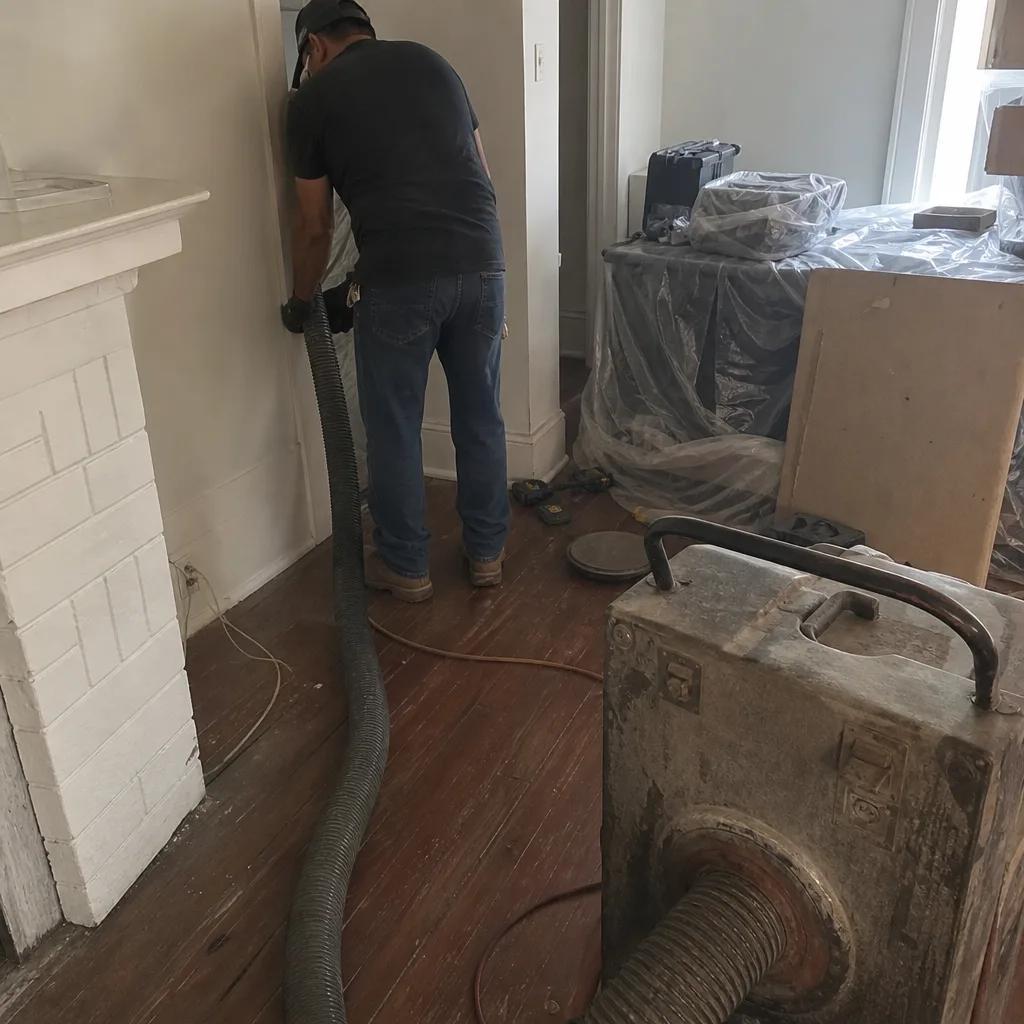
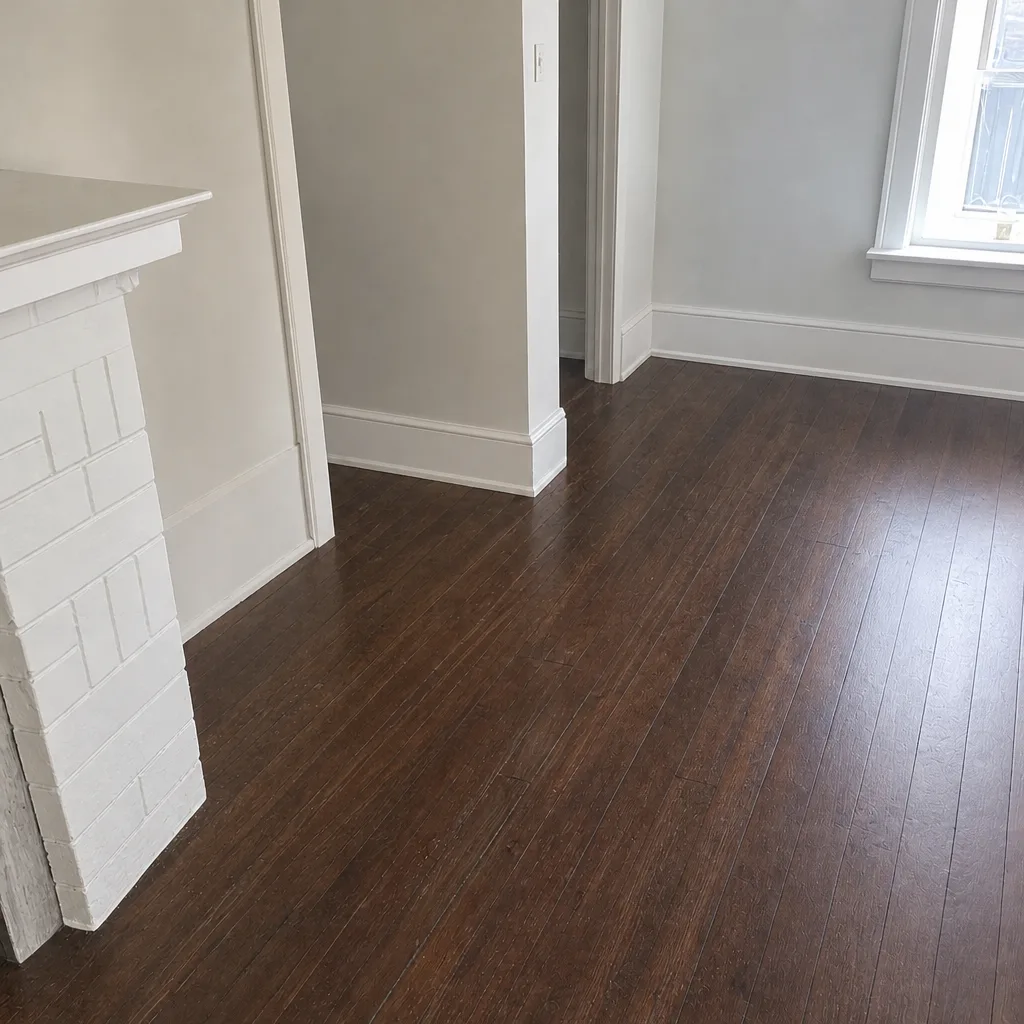
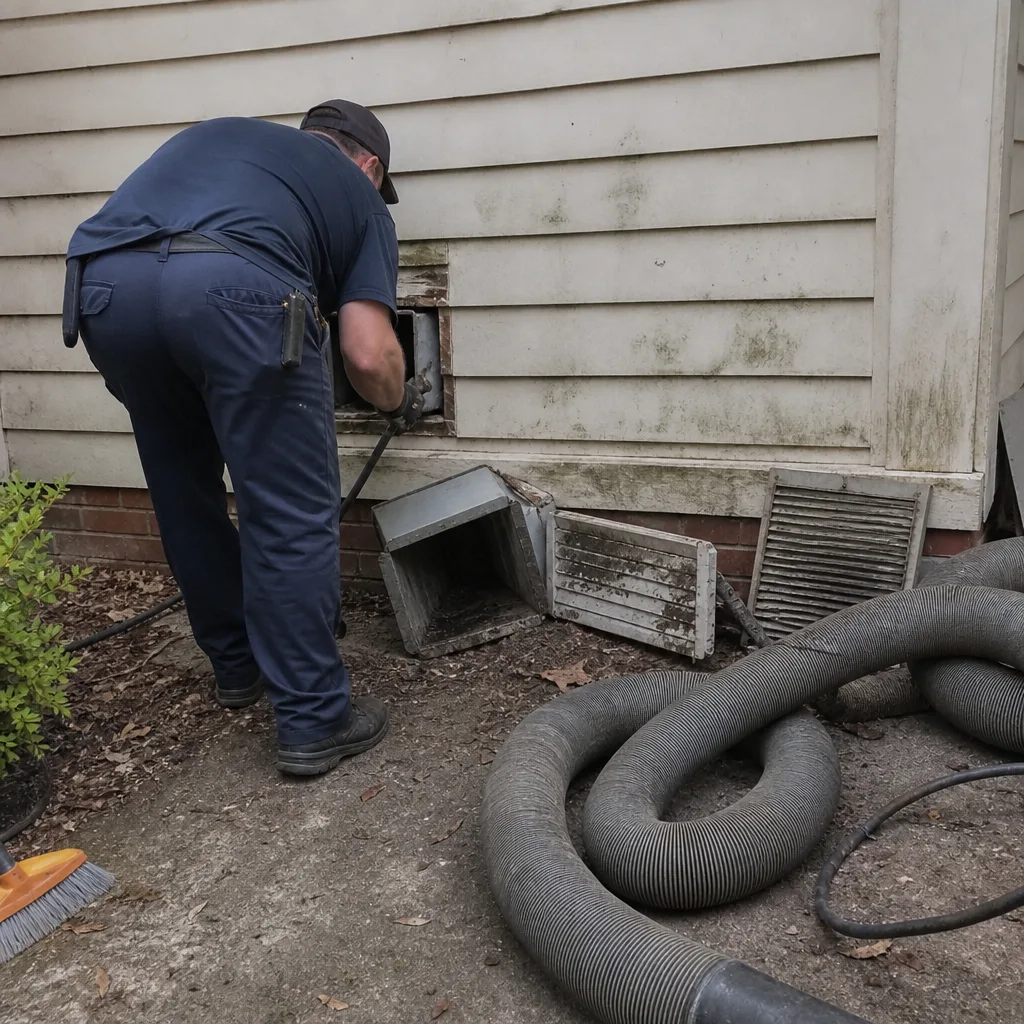
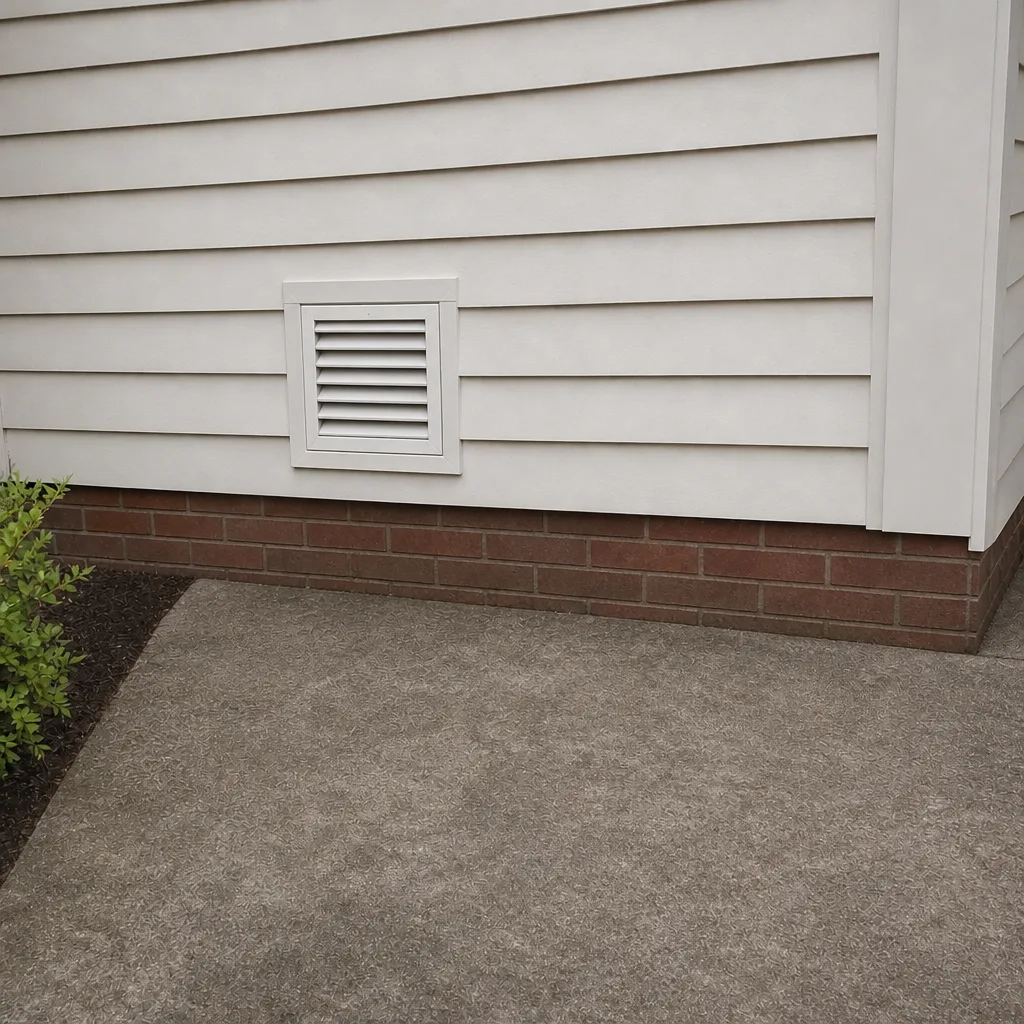
Whole-system duct and dryer vent check with before-and-after photos - you see exactly what came out of your vents
That "$99 whole-house special" is a bait ad - the real number appears once they are in your hallway, or the "clean" is a shop-vac at the register. We photograph the inside of your ducts before and after instead.
How to Hire an Air Duct Cleaning Contractor in Metairie: A Step-by-Step Guide
Any contractor in Louisiana can legally offer duct cleaning with a shop vac and a flashlight. There’s no specialized state license for the trade, which means the burden of vetting falls entirely on you, and most homeowners don’t know what to ask. That’s the whole problem in one sentence: a license check tells you almost nothing here. What actually separates a thorough job from a cosmetic one is equipment, process, and scope – three things you can verify with the right questions before anyone touches your system. This guide walks through those questions step by step, from what to ask on the phone to what a finished job should look like in a Metairie home.
Styles & brands we work with
- Whole-home duct cleaning
- Dryer vent cleaning
- Camera inspection
- Sanitizing & deodorizing
Quick Answer
Hiring an air duct cleaning contractor in Metairie means verifying three things before you book: the equipment they use (purpose-built rotary brush and negative-pressure machines, not consumer vacuums), the process they follow (containment, agitation, extraction, and photo documentation), and the scope of the quote (a whole-system price agreed in writing, not a per-vent figure). Ask about professional association membership, ask to see before-and-after photos, and walk your own system first so you know what a realistic quote looks like. A contractor who can answer those questions clearly and put the price in writing before work starts is the one to hire.
Table of Contents
- Why Duct Cleaning Requires Extra Vetting in Metairie
- The Equipment Questions You Must Ask
- Why NADCA Membership Is a Signal Worth Looking For
- What a $49 Bid Actually Tells You
- How to Scope Your Own System Before You Call
- What a Legitimate Job Completion Looks Like
- Red Flags to Watch During the Visit
- Common Mistakes to Avoid
- When to Call a Professional
- Frequently Asked Questions
- The Bottom Line
Why Duct Cleaning Requires Extra Vetting in Metairie
Louisiana does not issue a specialized duct cleaning license. A general contractor can offer the service, and so can someone with no trade background at all. That’s not a knock on local contractors – it’s just how the state regulates the trade, and it means the license number on a business card doesn’t tell you whether the person holding it owns a rotary brush machine or a wet-dry vac from a hardware store.
Metairie adds a few wrinkles of its own. The housing stock here is a mix of mid-century ranches, raised homes, and newer construction, and the duct systems reflect that range: slab-ducted systems in older homes, attic runs in others, and plenty of flexible duct retrofitted over the years. Homes in Metairie also run air conditioning hard for much of the year, which means duct systems stay wetter and dustier longer than in drier climates. Moisture plus dust is what feeds microbial growth inside ductwork, and that’s the condition a thorough cleaning is meant to address.
So the hiring decision is really a verification exercise. You’re confirming that the contractor has the machinery to agitate and extract debris throughout the system, that they contain dust during service rather than blowing it into your living room, and that the price you’re quoted covers the whole system rather than a teaser number that grows on the invoice. Every section below builds toward that verification. We’ve walked a lot of Metairie homeowners through these questions, and the pattern is consistent: the contractors who answer clearly are the ones who do the work properly.
The Equipment Questions You Must Ask
Equipment is the single clearest dividing line between a real duct cleaning and a decorative one. Ask these questions directly on the phone and listen to whether the answers are specific. Vague answers – “we have all the professional stuff” – are your cue to keep calling.
1. What kind of vacuum do you use? A truck-mounted negative-pressure unit is the gold standard because it pulls the entire duct system into a vacuum while the technician works, so loosened debris travels out rather than back into the room. Portable negative-pressure systems are also legitimate, as long as they’re purpose-built HEPA-rated units rather than a shop vac. What you don’t want to hear is a consumer vacuum. Professional setups use machines built for the job – our own crews run Nikro vacuum and negative-air equipment for extraction, and that’s the category of machine you should expect from anyone you hire.
2. How do you agitate the debris? Vacuum alone doesn’t lift dust that’s bonded to duct walls. Mechanical agitation is what breaks it loose. The most common tool is a rotary brush system that spins through the ductwork; compressed-air whips and manual brushes also appear. We use a Rotobrush rotary brush system for agitation, and purpose-built agitation is a reasonable standard to hold any contractor to. Ask which method they use and how it reaches the full length of each run.
3. Can you do a camera inspection? A technician should be able to look inside the ductwork, not just at the register grill. Look for a contractor who offers camera inspection capability. A camera shows you the before-and-after condition of the actual duct interior rather than just a clean-looking vent cover.
4. How do you contain dust during service? This is where professional filtration equipment matters. We deploy Abatement Technologies air filtration units on-site to control particulates during service, which keeps the work area clean. Ask what the contractor uses for containment. A good answer names a specific tool or method; a bad answer is “we’re careful.”
5. Do you offer repair, or only cleaning? Ductwork can disconnect, sag, tear, or leak. Cleaning a broken system just moves debris through the gaps. A contractor who offers repair as a real service – not a referral – is set up to fix what they find. That’s the scope question, and it matters more than people expect. We clean it, and if it’s broken, we fix it.
What acceptable answers sound like
- Vacuum: a named negative-pressure or truck-mounted system, not a consumer unit.
- Agitation: rotary brush, air whip, or manual brush, with an explanation of how each run gets covered.
- Inspection: camera capability offered up front, not after you ask.
- Containment: a specific filtration or negative-air setup.
- Repair: offered as a standalone service.
Why NADCA Membership Is a Signal Worth Looking For
The National Air Duct Cleaners Association (NADCA) is the trade body for this industry, and membership is worth asking about – but the reason is what membership actually requires of a contractor, not the logo on the website.
NADCA membership signals that a contractor has committed to a recognized standard of practice for duct cleaning and has agreed to follow a documented process rather than improvising. It also tends to correlate with equipment investment: members are expected to use professional-grade machinery and to follow source-removal practices rather than the “spray and pray” approach some low-cost operators use. Membership isn’t a license and it doesn’t guarantee a perfect job, but it’s a meaningful filter. A contractor who can tell you they’re a member and explain what that means to their process is one who takes the trade seriously.
Ask the question plainly: “Are you a NADCA member, and what does that require of you?” A good answer describes the standard, the equipment, and the inspection process. A bad answer is a logo without a sentence behind it. In Metairie, where the state doesn’t require a specialized license, this is one of the few external signals available to you, so it’s worth using.
What a $49 Bid Actually Tells You
When a bid comes in dramatically lower than every other quote, something has to give. The math is straightforward: a thorough whole-system cleaning takes time and machinery, and neither is free. To hit a teaser price point, an operator typically cuts one or more of the following.
- The agitation step. A vacuum-only pass skips the rotary brush work that actually loosens bonded dust. The ducts look cleaner at the register and stay dirty inside.
- The extraction step. Weak or consumer-grade vacuum equipment can’t move the full volume of debris, so it sits where it was.
- Containment. No filtration or negative-air setup means dust goes into your rooms instead of out of the system.
- Coverage. Some teasers cover only a handful of vents, with additional vents priced individually. The low number isn’t the system price.
- Inspection and documentation. Skipping camera inspection and before-and-after photos saves time and hides shortcuts.
None of this means every low bid is dishonest. It means the price should be explained, not just quoted. If a contractor can’t walk you through what their price covers – which parts of the system, how many runs, what equipment, what documentation – the number doesn’t mean much. Ask for the estimate in writing and compare what’s included, not just the total.
Renters and homeowners alike in Metairie deal with a lot of door-to-door duct cleaning offers. Treat an unsolicited low price the same way you’d treat any unsolicited offer: ask the five equipment questions above before you agree to anything.
How to Scope Your Own System Before You Call
You can do most of this preparation in ten minutes, and it makes every quote you get easier to judge. Knowing your own system lets you spot a quote that clearly doesn’t cover the job.
- Count your supply and return registers. Walk the house and count every vent that blows air and every return grill. Write the number down. Now you can ask “does this price cover all of them?” instead of guessing.
- Estimate your system’s rough age. Check the HVAC equipment’s data plate for a manufacture date. Older Metairie homes often have flexible duct retrofitted into tight spaces; knowing that helps you ask how the contractor reaches those runs.
- Locate your access points. Find the main trunk and any access panels. A contractor who needs to cut new access holes should tell you so up front, and it should be part of the job discussion.
- Note what’s visible at the registers. Dark streaks, visible dust buildup, or debris on the grill are worth mentioning. They’re clues about what’s inside the system.
- Check the dryer vent separately. Dryer vents are a different system from air ducts, and they need their own cleaning. Find the exterior vent flap and confirm it opens freely when the dryer runs.
With that information in hand, you can ask a quote-sensible question: “This price – does it cover 12 supply registers, 3 returns, a camera check, and photos?” A contractor who answers that directly is giving you a whole-system price. A contractor who says “well, that depends on how many vents” is quoting per-vent, which is exactly the structure you want to avoid.
A word on scope: cleaning, dryer vent work, and repair are three separate jobs that one qualified provider can handle together. Doing them in one visit saves you from coordinating multiple contractors, and it means the person looking inside your ducts can catch a loose connection or a crushed run while they’re there. If you’re booking air duct cleaning, ask whether repair and vent work can be scoped at the same time.
What a Legitimate Job Completion Looks Like
A proper job ends with documentation, not just a handshake. Here’s what a completed service should include, and what to ask for if it doesn’t.
- Before-and-after photos. Ask for photos of the duct interiors, not just the registers. This is the single best way to verify the work was actually done.
- Camera inspection results. If a camera was used during the job, the technician should be able to show you what it found – including any problem areas that need repair.
- A written invoice that lists the scope. It should say what was cleaned, how many runs or registers were covered, and what equipment was used. A vague invoice is a sign the job was vague.
- A clear explanation of anything found. Loose connections, damaged flex duct, and crushed runs are common finds. The technician should point them out and explain the repair options plainly.
- A price that matches the estimate. The written estimate sets the final price. If the number changes, it should be because you agreed to additional work, not because the original quote was a teaser.
One more thing to look at: containment removal. A contractor who set up filtration equipment should take it down cleanly and leave the work areas as they found them. Dust left on floors or furniture is a sign the containment step was rushed or skipped.
If your dryer vent was part of the visit, ask whether the technician confirmed the exterior flap moves freely and cleared any lint along the full run. A blocked dryer vent is a fire hazard waiting to be ignored, and clearing the lint at the dryer connection alone doesn’t solve it. The full length of the run has to be cleared.
Red Flags to Watch During the Visit
You’ve done the vetting, you’ve asked the questions, and the technician is on site. A few things are worth watching for during the visit itself.
- No containment setup. If the vacuum comes in and goes straight to work with no filtration or negative-air equipment, dust is going somewhere – into your rooms.
- Only cleaning registers. A technician who spends all their time at the vent covers and never works the duct runs is not cleaning the system.
- No camera, no photos. If the contractor can’t show you what’s inside the ducts before or after, you have no way to verify anything.
- Pressure to add services on the spot. Add-on recommendations should be explained and priced, not rushed. You’re allowed to think about it.
- Unexplained price changes. If the number on the invoice doesn’t match the written estimate and you didn’t approve additional work, push back.
- No explanation of what was found. A thorough technician wants to tell you what they saw. Silence about the condition of your system is a worrying sign.
None of these is a reason to panic. They’re reasons to ask questions while the technician is still there. A professional will answer them without being defensive.
Common Mistakes to Avoid
- Asking only about price. Price tells you what someone charges, not what they do. Lead with equipment and scope questions, then compare prices on equal jobs. A quote without a scope behind it isn’t a quote, it’s a number.
- Accepting a per-vent quote. Per-vent pricing makes it impossible to budget and invites upsells on the day. Ask for a whole-system price in writing before work starts.
- Skipping the camera inspection. Without a camera, neither of you knows what’s actually inside the system. In a Metairie home with years of heavy AC use, that matters more than it sounds.
- Forgetting the dryer vent. Homeowners often book duct cleaning and skip the dryer vent because it’s a separate system. It’s a fire-risk item and it deserves its own line on the scope.
- Not asking about repair capability. Cleaning a system with disconnected or crushed ductwork just moves debris through the gaps. Ask whether the contractor can fix what they find.
- Not checking NADCA membership. In a state without a specialized duct cleaning license, this is one of the few external signals available. Ask the question and listen to the answer.
- Hiring on the doorstep. An unsolicited offer at your door deserves the same five equipment questions as any other bid. If the answers are vague, don’t book.
When to Call a Professional
Not every dusty register means you need a full cleaning. But some signs do point to a system that needs professional attention rather than a vacuum and a weekend. Visible dust buildup at multiple registers, a musty or stale smell when the air comes on, persistent allergy or respiratory irritation that seems worse indoors, or noticeable dust settling on surfaces within days of cleaning are all reasons to have the system looked at. So is a dryer that takes longer than it used to, or an exterior dryer vent flap that stays closed while the machine runs.
Age matters too. If you’ve recently moved into a Metairie home and don’t know when the ductwork was last cleaned, or if you’re preparing for a renovation that will kick up significant dust, a professional assessment makes sense before the work starts rather than after.
Duct Cleaning Metairie offers free estimates in Metairie – call (833) 576-1083. We answer 24/7. Fast dispatch from 7am to 7pm, Sunday through Friday, closed Saturday.
Frequently Asked Questions
Air duct cleaning in Metairie is priced per system by a written estimate rather than per vent, and the total depends on the size of the system, how many runs it has, and whether repair work turns up during inspection. The written estimate sets the final price, and that’s the number to hold a contractor to. A quote that starts low and grows once the technician is on site means the original number wasn’t a system price to begin with. Call (833) 576-1083 for an exact quote – estimates are free.
Cheap quotes usually leave out the parts of the job that cost time and equipment: mechanical agitation with a rotary brush, true negative-pressure extraction, dust containment during service, camera inspection, and after-job photos. A vacuum-only pass on a few registers is fast and looks fine at the vent cover, but it doesn’t clean the ducts. Compare what’s included, not just the total. Call (833) 576-1083 for an exact quote – estimates are free.
Ask for before-and-after photos of the duct interiors and a written invoice that lists what was cleaned, how many runs were covered, and what equipment was used. Camera inspection capability lets you see the interior condition rather than taking someone’s word for it. A contractor who documents the job is one you can compare against another if you want to. Call (833) 576-1083 for an exact quote – estimates are free.
There’s no single right interval, and anyone who quotes you one without asking about your home is guessing. Visible dust buildup at the registers, musty odors when the system runs, recent renovation dust, a new-to-you home with an unknown service history, and persistent indoor allergy symptoms are the usual triggers. Homes in Metairie that run the AC hard may notice dust returning faster than they expect, which is a signal to have the system checked. Call (833) 576-1083 for an exact quote – estimates are free.
Louisiana doesn’t issue a specialized duct cleaning license, so the license check doesn’t carry the weight it does in other trades. That’s exactly why the equipment questions in this guide matter: ask about the vacuum, the agitation method, containment, camera inspection, and repair capability, and ask about NADCA membership. Those answers do the vetting a license normally would.
Yes, if the contractor offers all three as real services rather than referrals. We handle air duct cleaning, dryer vent cleaning, and air duct repair, which means one visit can cover the full scope and one point of contact owns the result. Call (833) 576-1083 for an exact quote – estimates are free.
The Bottom Line
Hiring a duct cleaning contractor in Metairie comes down to verification, not trust. Louisiana doesn’t require a specialized license for this trade, so the questions you ask – about the vacuum, the brush, the containment setup, the camera, and the repair capability – are doing the work a license check would elsewhere. NADCA membership is a useful signal, per-vent pricing is a warning sign, and before-and-after photos are your proof the job happened. Scope your system before you call, get a written whole-system estimate, and hold the contractor to it. That’s the whole guide in a paragraph, and it’s the same advice we give every Metairie homeowner who calls with a dusty register and a bad story about a $49 coupon.
Call (833) 576-1083 for a free estimate. We answer 24/7. Fast dispatch from 7am to 7pm, Sunday through Friday, closed Saturday. Our technicians have up to 9 years of experience, and we bring the machinery that makes the difference – Rotobrush and Nikro systems for agitation and extraction, Abatement Technologies filtration for containment. We clean it, and if it’s broken, we fix it.
Written by the team at Duct Cleaning Metairie.
See the difference
 Before
 After
 Before
 After
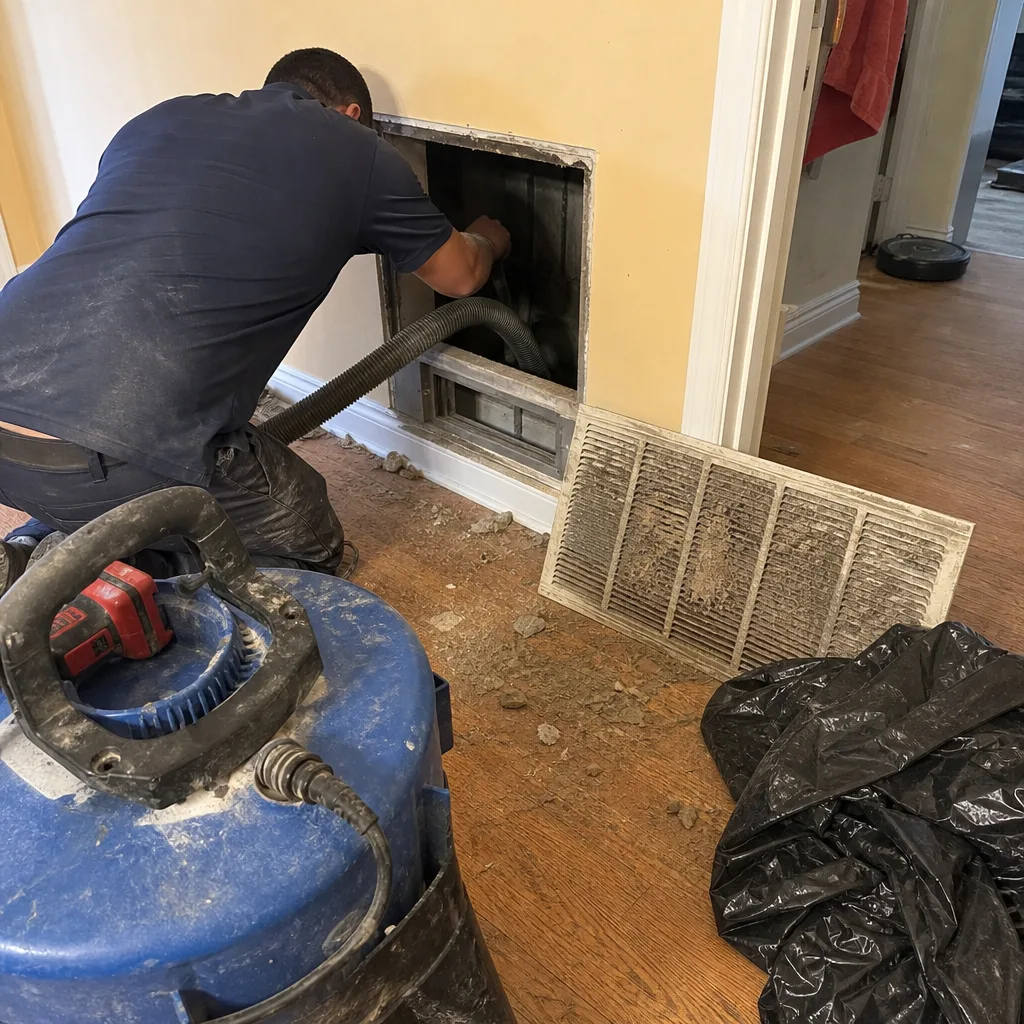 Before
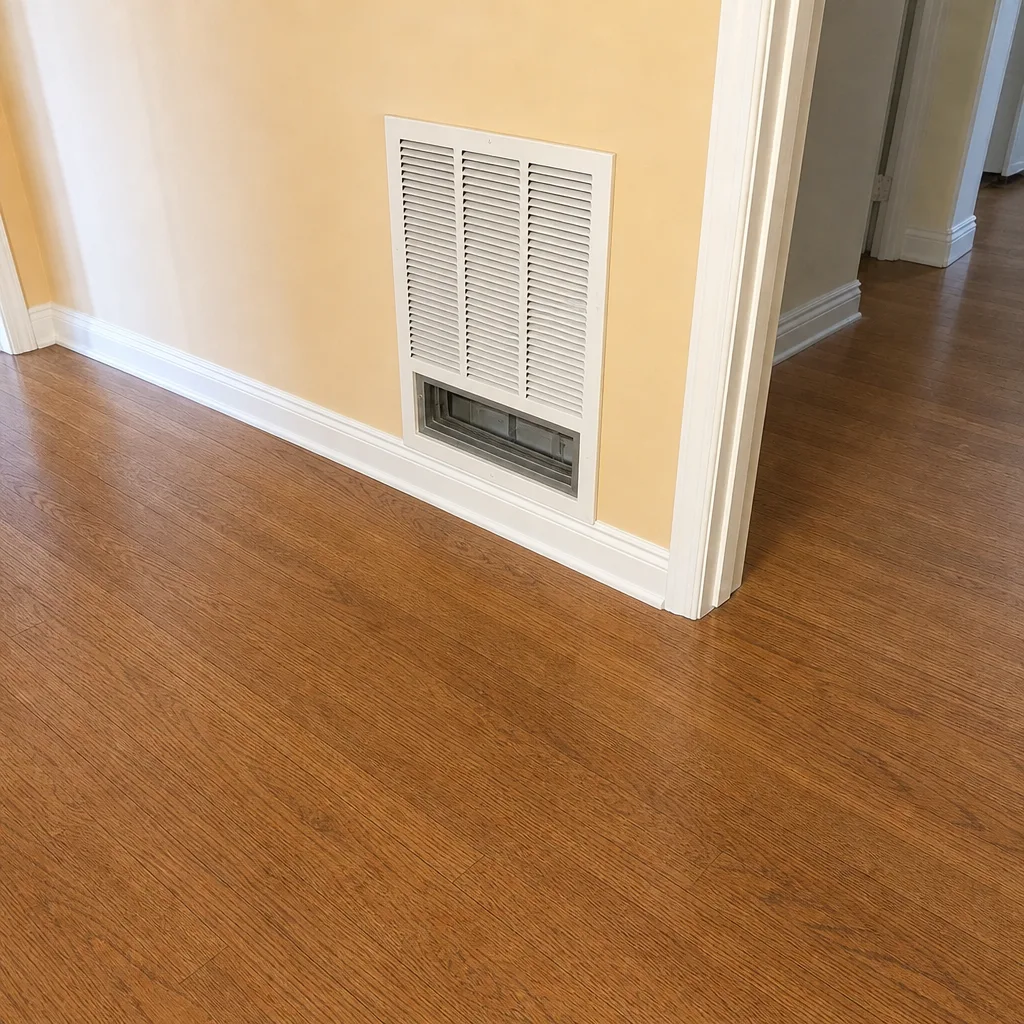 After