
Last updated November 15, 2026
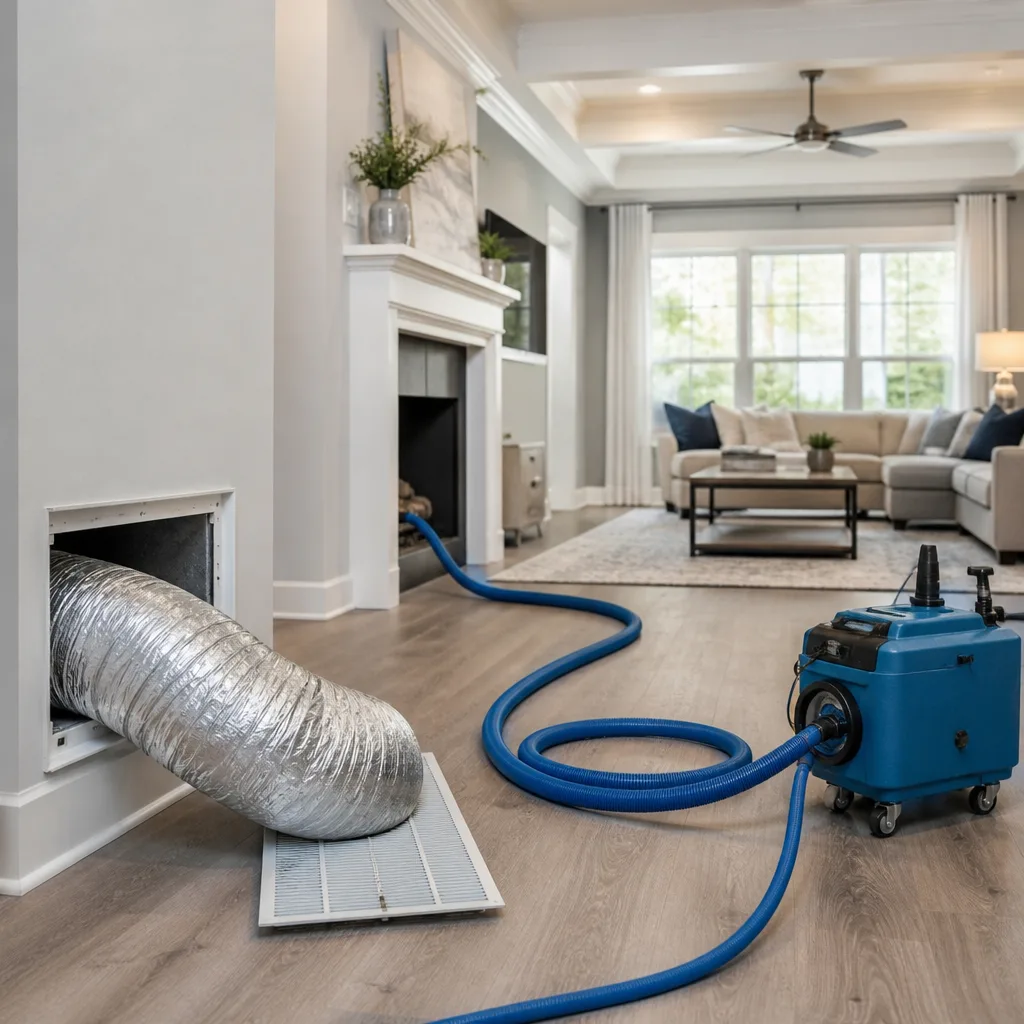 Whole-home duct cleaning
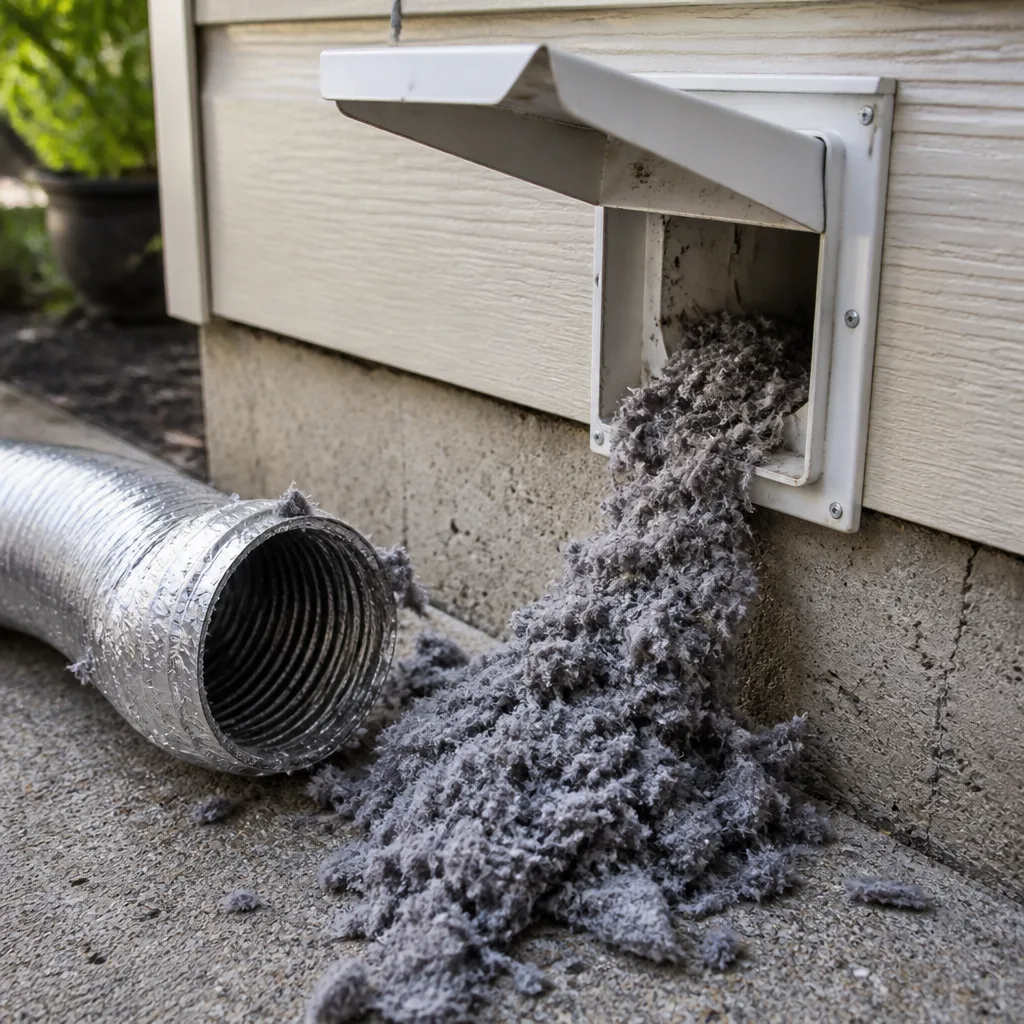 Dryer vent cleaning
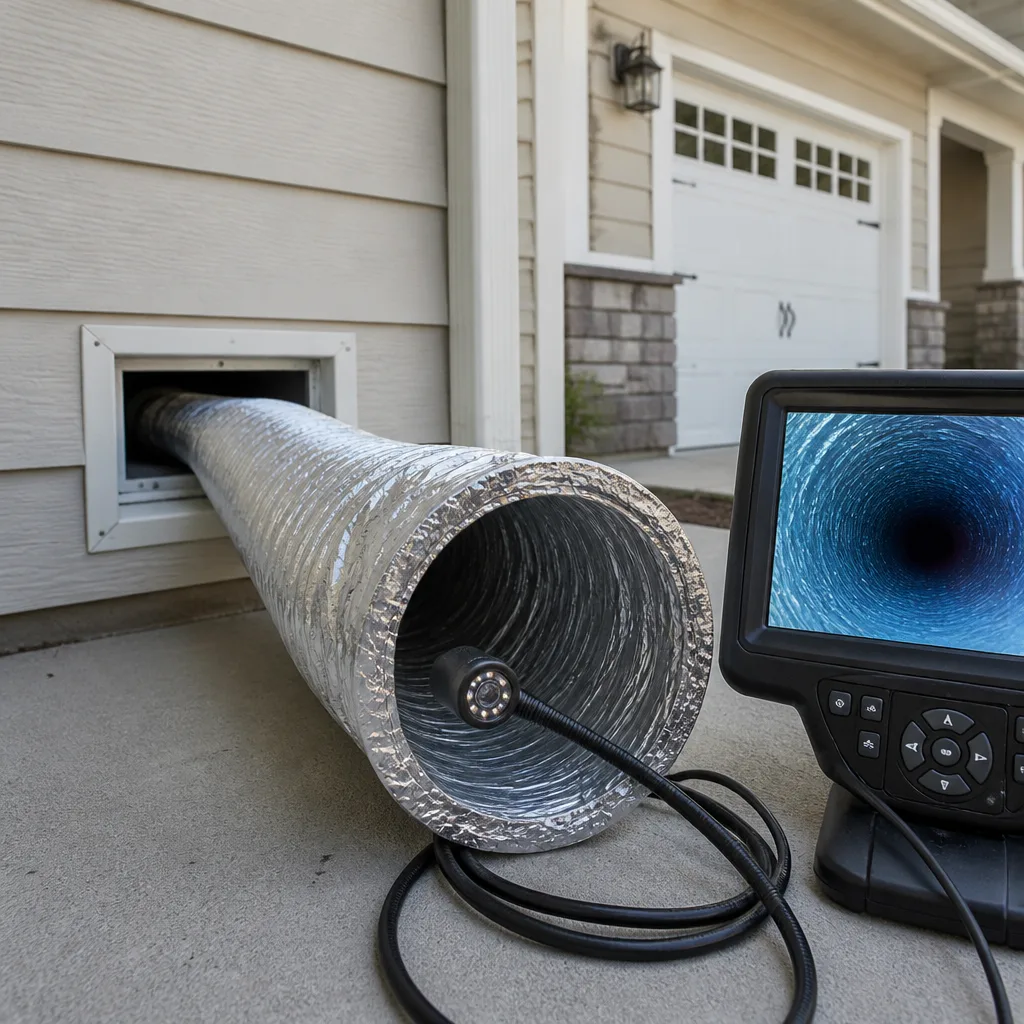 Camera inspection
 Sanitizing & deodorizing
Whole-system duct and dryer vent check with before-and-after photos - you see exactly what came out of your vents
That "$99 whole-house special" is a bait ad - the real number appears once they are in your hallway, or the "clean" is a shop-vac at the register. We photograph the inside of your ducts before and after instead.
Air Duct Cleaning Emergency Preparedness Guide for Metairie Homes
Most homeowners treat duct problems as a slow annoyance: a little dust on the ceiling fan, a filter that needs changing. Then a storm arrives, the power drops, water finds a way in, and the same homeowners restart their HVAC within hours of getting the lights back. That restart is the decision that turns a manageable cleanup into a major repair. Metairie sits in a region where hurricanes, tropical systems, and long outages are simply part of life, so duct emergency planning isn’t hypothetical here. What separates the households that recover cleanly from the ones that don’t is preparation: a documented baseline of how the system runs on a good day, and a clear protocol for what to check before power comes back. This guide walks through both, in order.
Quick Answer
Air duct emergency preparedness in Metairie means documenting your duct system before storm season, then following a fixed inspection sequence before restarting the HVAC after a power outage or flood event. The order is: check for water intrusion at the air handler, look for mold growth, inspect the ducts for debris and disconnected sections, and confirm airflow with a fresh filter before calling for professional cleaning. Restarting before that check is how a cleanable system becomes a contaminated one.
Styles & brands we work with
- Whole-home duct cleaning
- Dryer vent cleaning
- Camera inspection
- Sanitizing & deodorizing
Table of Contents
- Building a Duct System Baseline Before Storm Season
- The Post-Storm Inspection Sequence Before Restarting Your HVAC
- Water Intrusion: What Standing Water Means for Your Ductwork
- Extended Power Outages and Humidity Buildup in Idle Ducts
- Who to Call After a Storm, and in What Order
- Dryer Vents: The Other Emergency in Your Laundry Room
- When Cleaning Isn’t Enough: Air Duct Repair
- Seasonal Preparedness Checklist for Metairie Homes
Building a Duct System Baseline Before Storm Season
A duct baseline is a simple record of what your system looks like and how it performs when nothing is wrong. It costs almost nothing to make and it’s the single most useful document you can have after a storm. When a technician arrives and can compare current conditions to a known starting point, assessment takes minutes instead of guesswork. Without it, every judgment is a first impression.
Here’s what a useful baseline includes:
- Photos of the air handler and every accessible duct run. Shoot wide, then close. Include the return plenum, the filter slot, and the inside of the supply boots in each room. Note the date.
- Airflow notes at each register. Stand at each vent and describe what you feel. Strong, medium, weak. Doing this on a normal day creates a reference you can compare against after a storm.
- Filter size, type, and change date. Write it on a label on the unit or keep it in your phone. A post-storm inspection starts with knowing what was in there.
- Photos of the attic and any crawl space around the duct runs. Look for insulation type, duct material (flex, rigid, or a mix), and where the routes go.
- A dated note about any known quirks. A bedroom that’s always warmer, a return that whistles. Those quirks matter when you’re trying to tell new damage from old habits.
Do this once a year before hurricane season and after any change to the system. In Metairie, where homes in neighborhoods like Bucktown or Old Metairie mix older rigid duct with later flex retrofits, knowing what material runs where is half the battle. A baseline is also a useful benchmark for routine air duct cleaning, since a technician can see what changed since last time. If you want a visual walkthrough of what a professionally documented system looks like, the main page at Duct Cleaning Metairie gives a good starting reference.
What to photograph in each room
For every room with a supply register, take one photo showing the vent in context and one close-up of the grille and the visible duct interior behind it. Do the same for return grilles. Don’t skip closets or hallways where the filter is hidden. These are exactly the spots where storm intrusion is easiest to miss.
Write it down, not just photograph it
Photos show what a duct looks like. Notes show what it does. A one-page document with register-by-register airflow observations, filter specs, and any prior service dates gives a technician something to work against. Store a copy in the cloud so a water-damaged paper file isn’t your only record.
The Post-Storm Inspection Sequence Before Restarting Your HVAC
After any storm that caused a power outage, flooding, or roof damage, don’t restart the HVAC until you’ve walked the system in order. The sequence matters because each step informs the next, and skipping ahead can turn a dry, contaminated duct into a wet, contaminated, growing one in a single cooling cycle.
- Confirm the power is stable. Listen for surges and check whether other major appliances restarted cleanly. If the utility has issued a “boil water” or “restoration advisory,” stabilize those first.
- Inspect the air handler for water. Look inside the unit, at the base pan, and on the floor around it. Any standing water, damp insulation, or mineral staining is a disqualifier for restart.
- Walk the attic and any crawl space. Check the duct runs for standing water, sagging, or condensation that’s heavier than usual. Water tracks along the outside of flex duct for surprising distances. Look at the roof deck for recent staining.
- Smell the air before you start the fan. A musty or earthy smell from a vent is a signal. Don’t sample it by running the fan; that pushes whatever’s in there into every room.
- Look for visible mold inside registers and duct openings. Use a flashlight. Discoloration on flex duct interior liner or wood framing is a stop sign. The EPA’s general guidance is that mold cleanup on porous materials over a small area is often not worth attempting; replacement and professional assessment are the safer route.
- Check every accessible duct connection. Any separated collar, torn flex, or missing register boot is a breach. Debris and moisture get in through breaches, and conditioned air escapes through them.
- Install a fresh filter, then restart briefly. Run the system for a few minutes only, then shut it down and re-check for odors and any new water. If anything is off, stop.
If any step in that sequence fails, the correct “restart now” decision is no. Call a professional to assess before the system runs again. What disqualifies a restart is any of the following: standing water near the air handler, visible mold, a musty smell, a disconnected duct, or a system that was flooded above the equipment line. Each of those is a call-a-professional trigger, not a wait-and-see.
Why the order matters
If you turn on the fan to “flush out” the ducts after a storm, you distribute whatever moisture and debris is inside across every room. If you run the system before checking for a disconnected duct, you push outside air and potential mold spores into the conditioned space. If you restart the AC before confirming the condensate drain is clear, you can flood the air handler’s base pan inside a cabinet with an energized blower. The sequence protects both your family and the equipment.
Water Intrusion: What Standing Water Means for Your Ductwork
Standing water near the air handler or in a crawl space creates a genuine contamination event for ductwork. Ducts are not sealed against moisture. Water wicks into insulation on flex duct, collects in low spots, and raises indoor humidity inside the duct to levels where mold colonization begins within roughly 24 to 48 hours of a wet event in warm conditions. Metairie’s warm, humid climate makes that window short.
What actually happens, in plain terms:
- Water enters the insulation. The fiberglass or foil bubble wrap on flex duct is not watertight. Once saturated, it loses insulating value and traps moisture against the liner.
- Interior liner becomes a food source. The interior surface of most flex duct has organic material. Combined with dust and moisture, it feeds mold growth quickly.
- Mold colonization begins in about 24 to 48 hours. That’s the general window for typical indoor building materials under warm, humid conditions. Every hour of waiting gives the growth more to work with.
- Rigid metal duct handles water differently. The metal itself resists mold, but duct board and internal insulation do not. Metal ducts with internal insulation are just as vulnerable as flex in the flooded sections.
What standing water means, practically, is that no amount of drying the floor addresses the problem. A duct run that was submerged or saturated needs professional inspection, and in most cases the affected section needs replacement rather than cleaning. If mold is present, that’s a job that crosses from duct cleaning into mold assessment. Cleaning alone won’t solve a saturated liner; the liner has to go. Professional duct cleaning can handle the dry sections and help restore the rest of the system, but a contractor who says they can “clean out” mold from saturated flex duct is overselling.
Crawl space versus air handler
In older Metairie homes, duct runs frequently cross unconditioned crawl spaces that pool water during heavy rain. Water near the air handler is usually a plumbing or condensate issue; water in a crawl space is storm-driven and can be more widespread. Both matter. A moisture meter at the duct surface is the fastest way to tell contamination from a surface splash: any reading above dry ambient levels means the run needs a closer look.
Extended Power Outages and Humidity Buildup in Idle Ducts
An idle duct system in a hot, humid Metairie house acts like a slow sponge. During an extended power outage, the AC isn’t moving air, the dehumidifier isn’t running, and windows are usually open or compromised. Interior surfaces of the ductwork reach ambient temperature and start absorbing moisture from the air. What happens next depends on how long the outage lasts.
- Days 1 to 3: Humid air fills the ducts. Condensation forms on any surface that stays cooler than the air, mostly the metal components and any duct touching a tiled floor. At this stage the system can usually be dried by running it with a fresh filter and the fan set to on for a few hours, once power returns and inspection is clean.
- Days 3 to 7: The ducts stay wet longer. Dust that was already inside becomes a substrate, and biological growth can start in the more humid sections. The smell is usually noticeable when you first turn the system back on.
- Beyond a week: Extended idle time with no airflow is when light growth becomes a real remediation conversation. Contamination is more widespread and more likely to need professional cleaning.
Two factors drive the timeline faster: an older system with more dust, and a leaky duct system that pulls humid outdoor air in passively. If the windows were open during the outage, the duct system pulled outdoor air through every gap. If the house is newer and tighter, the growth window is longer, but the risk isn’t zero.
What to do on day one after power returns
- Install a fresh filter before the first restart.
- Run the fan-only setting for a few hours with windows closed, checking for odors at each register.
- If the smell is off, or any registers feel weak compared to your baseline, shut it down and call for an inspection.
- Note the outage duration and the weather conditions in your maintenance log. Both help the next assessment.
If your home’s duct runs are aging and prone to leaking, this is also a good moment to consider air duct repair so the next outage doesn’t pull as much humid air in. Sealing the system is the highest-value preparedness step most Metairie homeowners can take.
Who to Call After a Storm, and in What Order
After a storm event, three different trades end up involved in getting a home back to normal: HVAC contractor, duct cleaning specialist, and mold remediation contractor. Conflating those roles is where things go wrong. Calling the wrong one first wastes time and sometimes money, and hiring a contractor who offers all three without the equipment to back any of them up leaves the actual problem half-solved.
Here’s the triage in order:
- HVAC contractor first when the system won’t power on, the compressor is dead, refrigerant is gone, or controls are damaged. HVAC handles the mechanical system.
- Duct cleaning specialist second when the system runs but the ducts are contaminated, have standing water in a run, or smell musty after the outage. That’s a duct job, not an HVAC job.
- Mold remediation contractor when there’s visible mold on more than a small area of building materials, especially structural wood or drywall. That’s beyond duct cleaning. Metairie’s humidity means mold is common after water events, and it needs its own scope.
- Duct repair specialist when the system is clean but has disconnected, crushed, or leaking ductwork that prevents it from working properly. This is the piece most homeowners forget.
Where it gets messy is that some contractors blur the lines. An HVAC company that offers “duct cleaning” usually means a shop vac and a hose, not the professional equipment required for actual mechanical agitation. A mold remediation company that also offers duct cleaning may not have the duct-specific tools to agitate and extract properly. Duct cleaning requires professional-grade equipment, not an improvised tool. The systems we use are built for it: a Rotobrush rotary brush for mechanical agitation, a Nikro vacuum and negative-air setup for extraction, and Abatement Technologies air filtration units to control particulates while we’re on site.
What to say when you call
Describe the storm event, the outage duration, whether water entered the home, and what the system is doing now. “The AC is on, but the house smells like a basement” tells a technician more than “the AC is broken.” Have your baseline photos accessible. If you don’t have a baseline, say so, and ask whether the assessment can include one going forward.
Dryer Vents: The Other Emergency in Your Laundry Room
Storm preparedness guides usually stop at the ducts that cool the house. The dryer vent is just as important and gets far less attention. Lint buildup in a dryer vent restricts airflow, and the heat inside the dryer rises. Dryer vent fires are a recognized residential fire cause, and long, restricted runs and crushed flex vent behind the dryer are common contributors. If you’ve noticed clothes taking longer to dry or the dryer cabinet itself getting hot to the touch, the vent is clogged.
Post-storm, dryer vents are vulnerable in specific ways:
- Wind-driven debris can enter the exterior vent hood or the run itself. Bird nests and leaf litter are common.
- Water intrusion at the exterior termination wicks along the vent and creates a moisture pocket inside the run.
- Long, kinked runs that were borderline before the storm get worse quickly after any crushing.
A full dryer vent cleaning after storm season is a simple, direct way to reduce the risk. A technician brushes and vacuums the full run from the back of the dryer to the exterior termination, checks that the flapper opens freely, and confirms airflow. It’s the kind of maintenance that’s easy to skip and genuinely worth doing.
How often the dryer vent actually needs cleaning
General guidance is once a year for most households, more often if the run is long, the load volume is high, or you have pets in the household. A storm event is also a natural trigger regardless of schedule. If the vent has never been cleaned and the home is more than a few years old, doing it once is a starting point, not a someday item.
When Cleaning Isn’t Enough: Air Duct Repair
Cleaning restores a sound system. It doesn’t restore a broken one. After a storm, homeowners in Metairie routinely discover that cleaning alone leaves them with the same airflow complaints, because the underlying problem was structural: a disconnected flex collar in the attic, a crushed section behind a knee wall, a leaking joint at the plenum, or a torn return trunk. Cleaning can’t fix those. Repair can.
What falls under duct repair:
- Re-seating disconnected collars and register boots
- Replacing crushed or moisture-saturated flex runs
- Sealing leaking joints and plenum connections
- Correcting sagging runs that collect condensation
- Removing and replacing sections that failed a mold assessment
We treat duct repair as its own service for a reason. It’s the piece of the work most duct cleaners don’t offer, and it’s the piece that keeps a cleaned system clean. A run that pulls unconditioned humid air in through an unsealed gap will be dirty again faster than the homeowner expects. A run that was repaired as part of the same job stays clean and delivers the airflow the system was designed for.
Equipment matters here too
Repair without proper equipment is guesswork. The same professional tools that clean the ducts (mechanical agitation, negative-air extraction, and on-site filtration) are what make it possible to work inside the system without re-contaminating the house. We work with HVAC and air-quality brands including Honeywell, Aprilaire, and Guardsman because Metairie homes run a wide range of installed systems, and addressing the repair correctly means being familiar with more than one manufacturer’s hardware. A single-service contractor who only knows one brand often ends up working around the problem.
Seasonal Preparedness Checklist for Metairie Homes
Preparedness is a short list done consistently, not a big project. Here’s the checklist we recommend for every Metairie home, timed before hurricane season and again after any storm event that caused power loss or water intrusion.
Before the season
- Create or update your duct baseline. Photos and airflow notes.
- Stock a spare filter of the correct size in the house.
- Have the ducts professionally inspected if you can’t remember the last cleaning.
- Confirm the exterior dryer vent hood opens freely and isn’t blocked.
- Photograph the air handler, the duct openings, and the filter label one more time.
When a storm is forecast
- Change the filter before the storm so you start clean.
- Clear anything stored against duct openings or register boxes, especially in closets and attics.
- Take the exhaust vent hood off its complaint list by checking it now.
- Keep the baseline document somewhere you can access without power (phone photo or a printed copy in a plastic sleeve).
After any storm event
- Run the post-storm inspection sequence before turning the system back on.
- Note the outage duration and whether windows were open.
- Call for professional assessment if any step in the sequence raises a flag.
- Schedule dryer vent cleaning if the storm was high-wind.
- Update the baseline.
For homeowners in Metairie who want a local reference for who does this kind of work and what a proper scope looks like, the Metairie area page and the main service pages give a good overview. If you’re comparing contractors, the questions in the next section are the ones that separate a real assessment from a sales visit.
One nice-to-have that pays off
A small moisture meter costs little and tells you immediately whether a duct surface is dry or damp. It’s not a substitute for a professional assessment, but as a homeowner diagnostic before calling, it helps you describe what you’re seeing accurately. Keep it in the same drawer as the flashlight.
Common Mistakes to Avoid
- Restarting the system immediately after power returns. It feels efficient, but if there’s hidden moisture or a disconnected duct, the fan distributes the problem across every room. Give it ten minutes of inspection first.
- Using a shop vac or a rented blower to “clean” ducts yourself. Consumer equipment doesn’t agitate stuck debris or extract it against negative pressure. Worse, it can aerosolize mold spores and spread them through the house. Professional equipment exists for a reason.
- Assuming an HVAC “duct cleaning” add-on is the same service. Most HVAC companies offer it as an afterthought without the duct-specific equipment. Ask what tools they use and whether agitation and containment are on the truck.
- Skipping the dryer vent because it’s not “the HVAC.” Dryer vents restrict airflow, raise dryer heat, and are a fire concern. If the vent hasn’t been cleaned in more than a year, it’s overdue.
- Cleaning without checking for duct damage. A cleaned duct system with a disconnected collar goes right back to contaminated. Cleaning and repair should be assessed together.
- Treating visible mold as a cleaning problem. If a duct’s interior liner is mold-affected or moisture-saturated, cleaning isn’t the right first step. Assessment and, sometimes, replacement are.
- Not documenting the system before the storm. Without a baseline, post-storm assessment is guesswork. Photos and airflow notes cost almost nothing and change the whole recovery picture.
See the difference
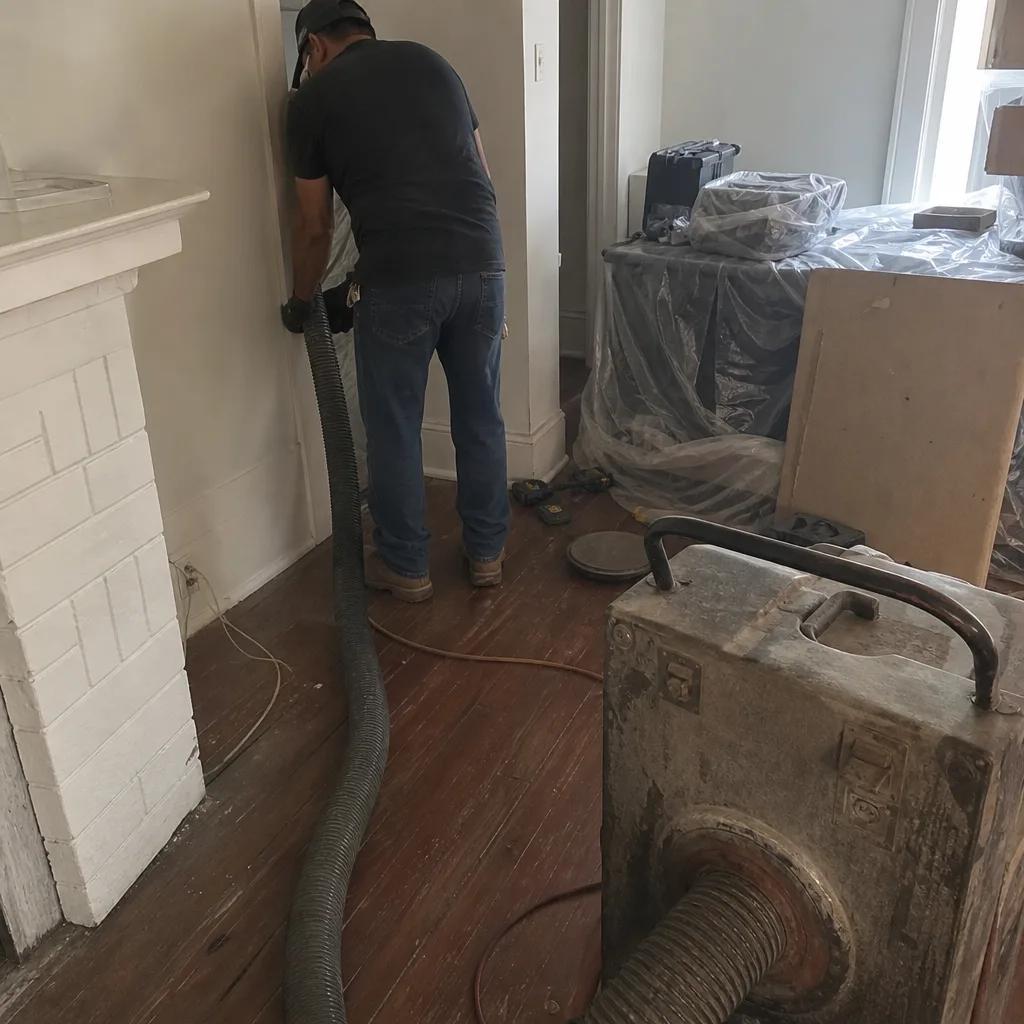 Before
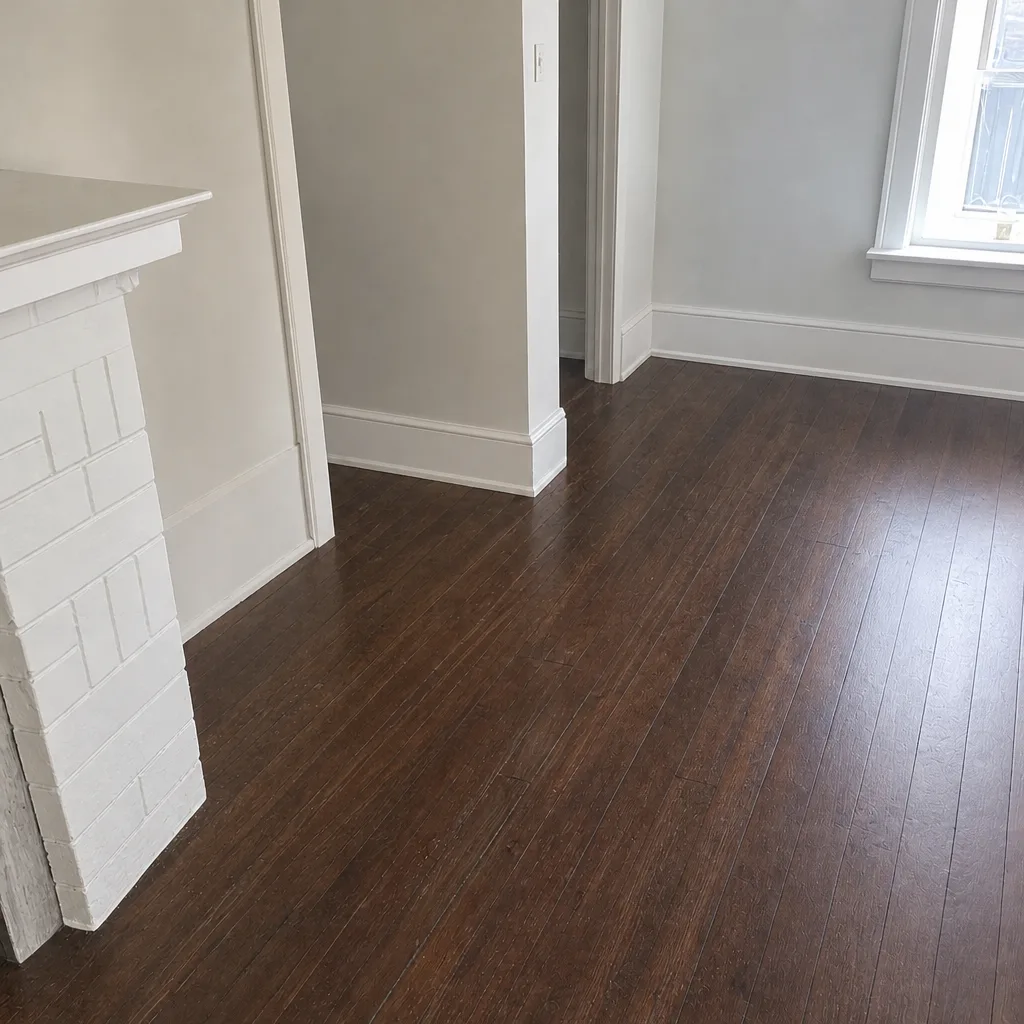 After
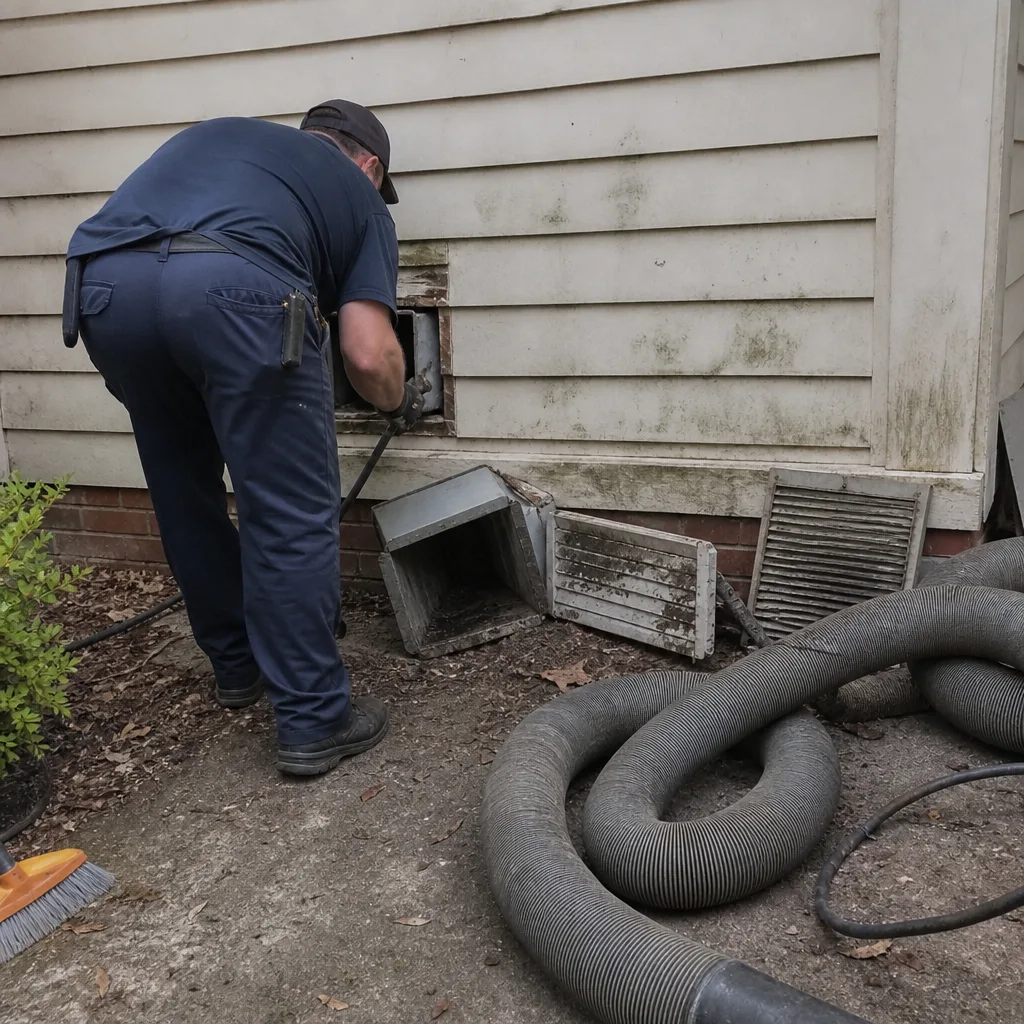 Before
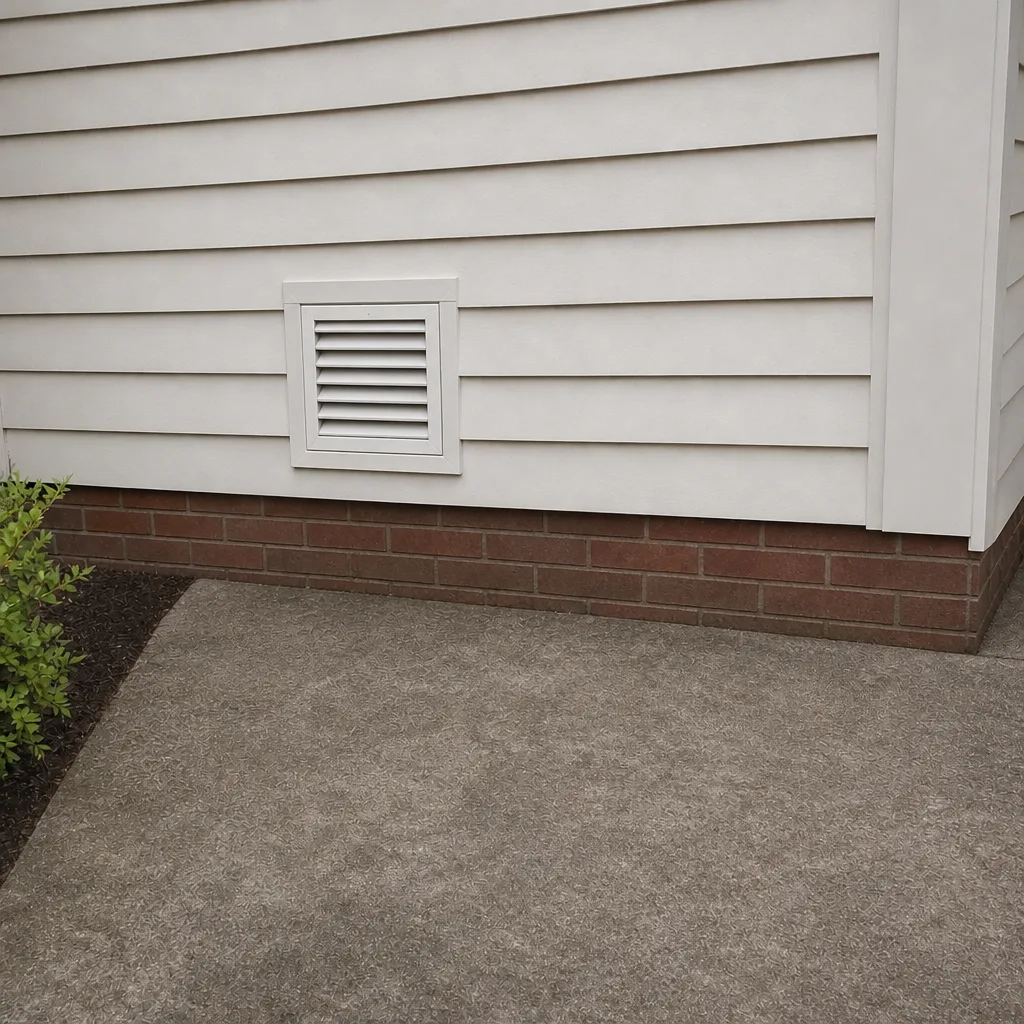 After
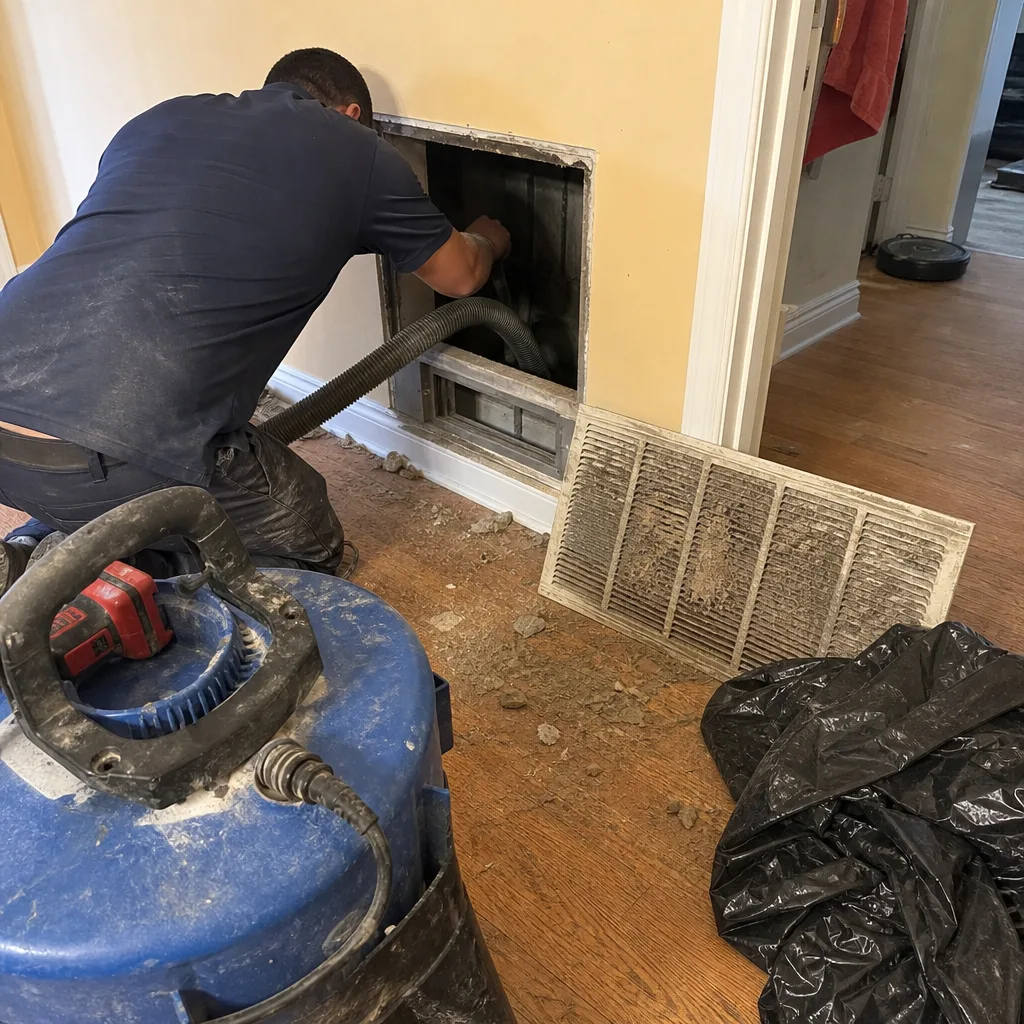 Before
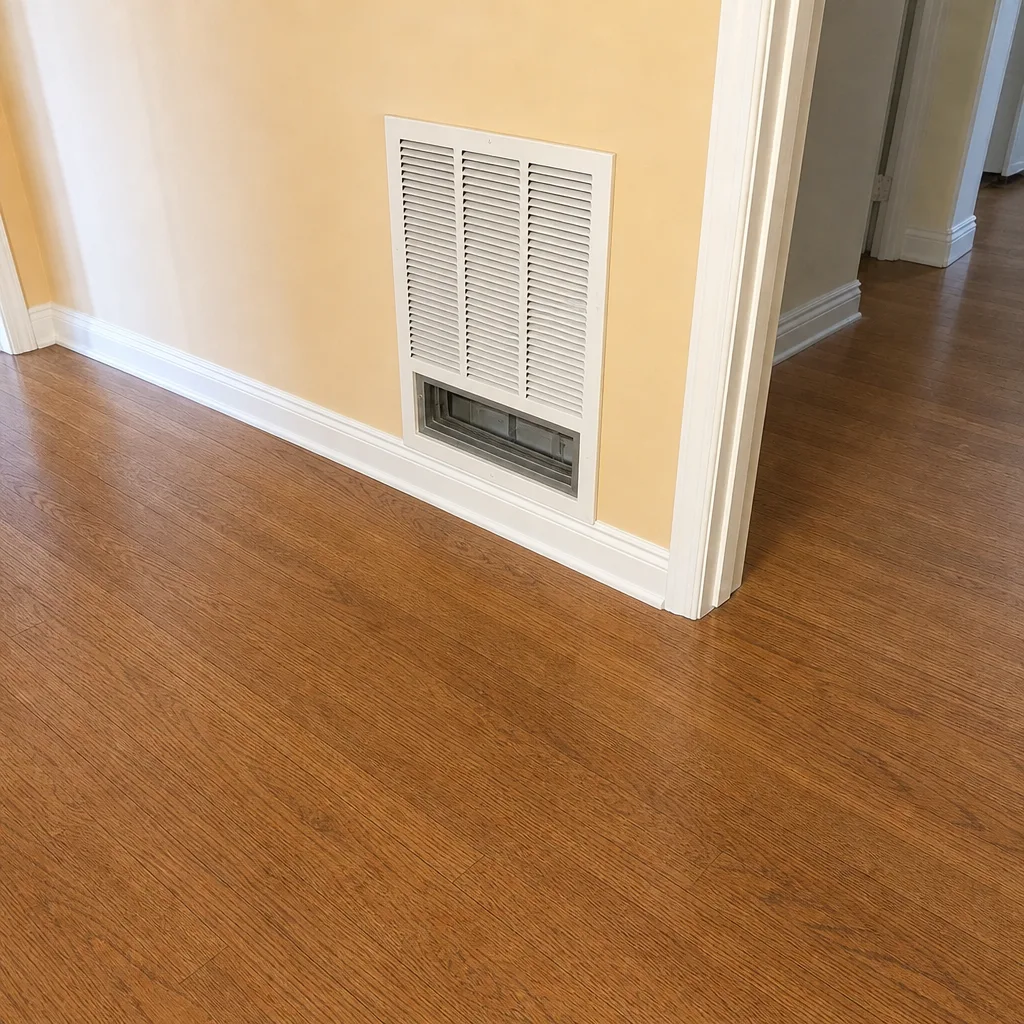 After
When to Call a Professional
Call a professional when any of the following is true: you’ve had water in the attic, crawl space, or near the air handler; the system smells musty after a storm; a duct has visible tearing or a disconnected collar; the system hasn’t been cleaned in more than two or three years and you can’t remember the last inspection; the dryer is taking too long or the dryer cabinet is hot to the touch; or a storm outage lasted more than a few days and the system was idle without airflow. Duct Cleaning Metairie offers free estimates in Metairie and handles cleaning, dryer vent work, and duct repair as separate, properly scoped services. Call (833) 576-1083 for a free estimate. We answer 24/7, and we dispatch from 7am to 7pm, Sunday through Friday.
Frequently Asked Questions
Air duct cleaning in Metairie is typically priced as one flat price per system rather than per vent, agreed in writing before any work starts. That single price covers the full scope: inspection, agitation, extraction, and before-and-after photos of your own ducts. It’s structured that way to avoid the bait-and-switch the industry is known for. Call (833) 576-1083 for an exact quote. Estimates are free.
Not until you’ve walked the post-storm inspection sequence: check for water at the air handler, look for visible mold, smell for mustiness, confirm no disconnected ducts, install a fresh filter, and only then restart briefly. If any step fails, don’t restart. Call for a professional assessment. Running the system before checking is how a manageable problem becomes a large one.
Cheap quotes usually reflect per-vent pricing with a low teaser figure that grows once work begins, or consumer-grade equipment standing in for professional-grade tools. A fair quote is one flat price per system that’s agreed in writing before any work starts and includes before-and-after photos of your own system. Ask what equipment will be used. If the answer is a shop vac or a rented blower, that’s not duct cleaning.
Ask for before-and-after photos of your own ducts, not stock images. A proper job is documented, and if the technician can’t show you what came out of your system, you’re paying for something you can’t verify. We take photos of every job because it’s the fastest way to know what happened.
Under warm, humid conditions, mold colonization can begin within roughly 24 to 48 hours of a wet event. Metairie’s climate is a factor. That’s the practical reason why “dry it out and wait” is the wrong response to water in the ducts. Any duct that was flooded or saturated needs professional inspection, and usually the affected section needs replacement, not cleaning.
It depends on what’s broken. Call the HVAC contractor if the system won’t power on, the compressor failed, or controls are damaged. Call a duct cleaning specialist if the system runs but the ducts are contaminated, wet, or smelly. Call a mold remediation contractor if visible mold covers more than a small area of building materials. Confusing those roles is the most common recovery mistake. Call (833) 576-1083 for duct-specific work or repair estimates. Estimates are free.
The Bottom Line
Duct emergencies in Metairie follow the weather. Hurricanes, extended outages, and water intrusion are the pattern, not the exception, so the preparedness that matters most is the kind you do before anything happens. Document your system with photos and airflow notes. Follow the inspection sequence before restarting after any outage. Understand that water in the ductwork is a professional event, not a dry-it-yourself one. And don’t overlook the dryer vent, which has a fire risk that a lot of homeowners ignore. Clean the system when it’s due, repair it when it’s broken, and know the difference. The homeowners who do that are the ones who come out of the next storm with a clean, dry, working system and a shorter repair list.
Written by the team at Duct Cleaning Metairie.